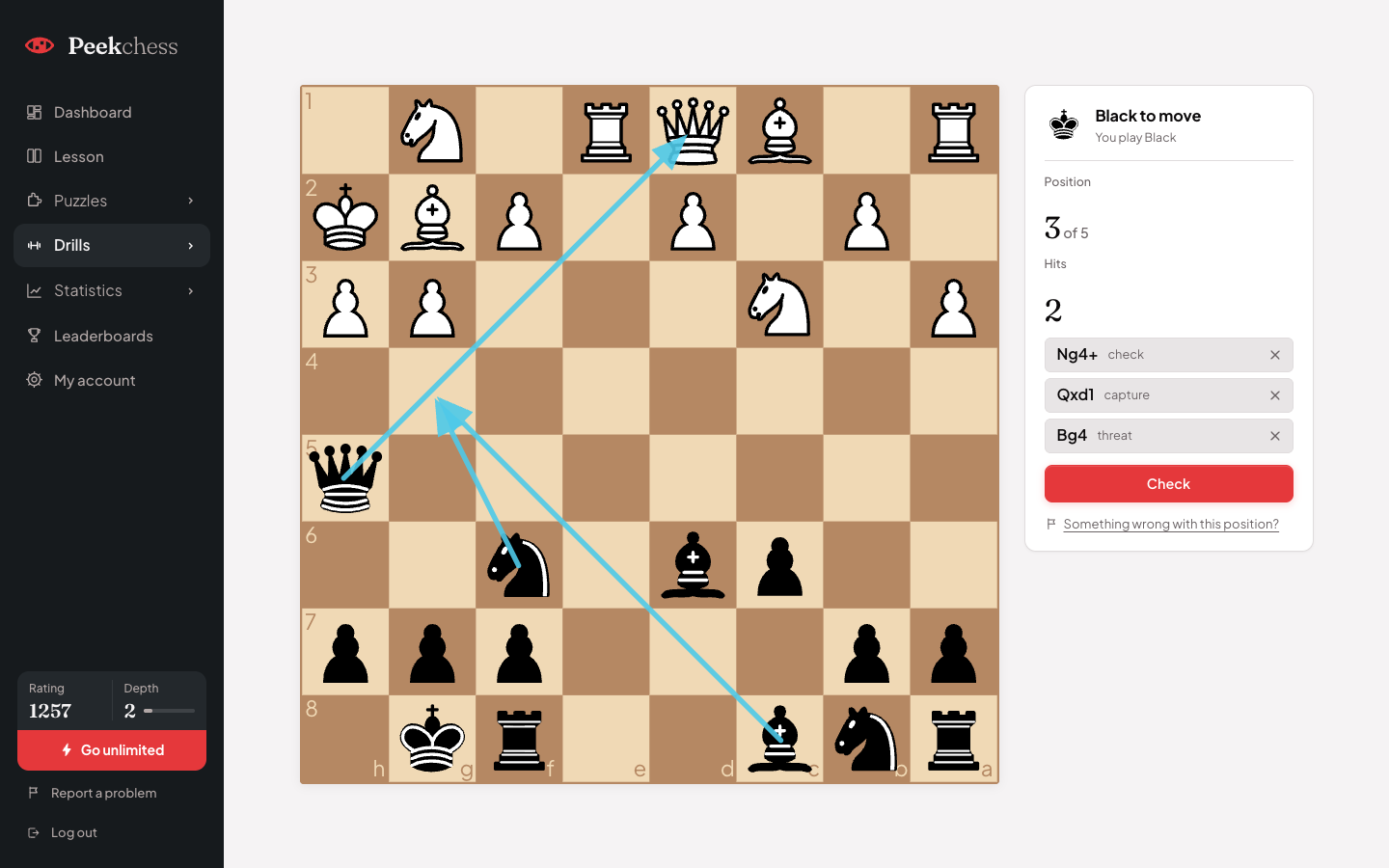
Chess rating plateau?Why your puzzles skip the calculation

You've done thousands of tactics puzzles and hit a chess rating plateau. One reason is that on puzzle sites the pieces move as you go, so you can solve one move at a time, and in a game the board doesn't move until you do. That gap is in your chess calculation, and here's what to do about it.
How much of your calculation do puzzle sites check?
On the big puzzle sites, the pieces move as you go. You play a move, and if it's right, the opponent's reply appears on the board. That means you can solve one move at a time, like this.
- 1Find a move that looks forcing.
- 2Play it and see if the site accepts it.
- 3Look at the new position, with the reply already on the board.
- 4Do it again.
At every step the board shows you the reply, so you never have to find it yourself. A puzzle solved like that is partly trial and error.
Why am I good at puzzles but bad at games? The calculation gap
In a game the board doesn't move until you do. Before you play a sacrifice, you need to have seen the reply, your next move and where it all ends, with every piece still standing where it is now.
Puzzles reward spotting a good first move. Games ask you to calculate the whole line before you touch a piece. That difference is the calculation gap. Train only the first, and that's all you bring to your games.
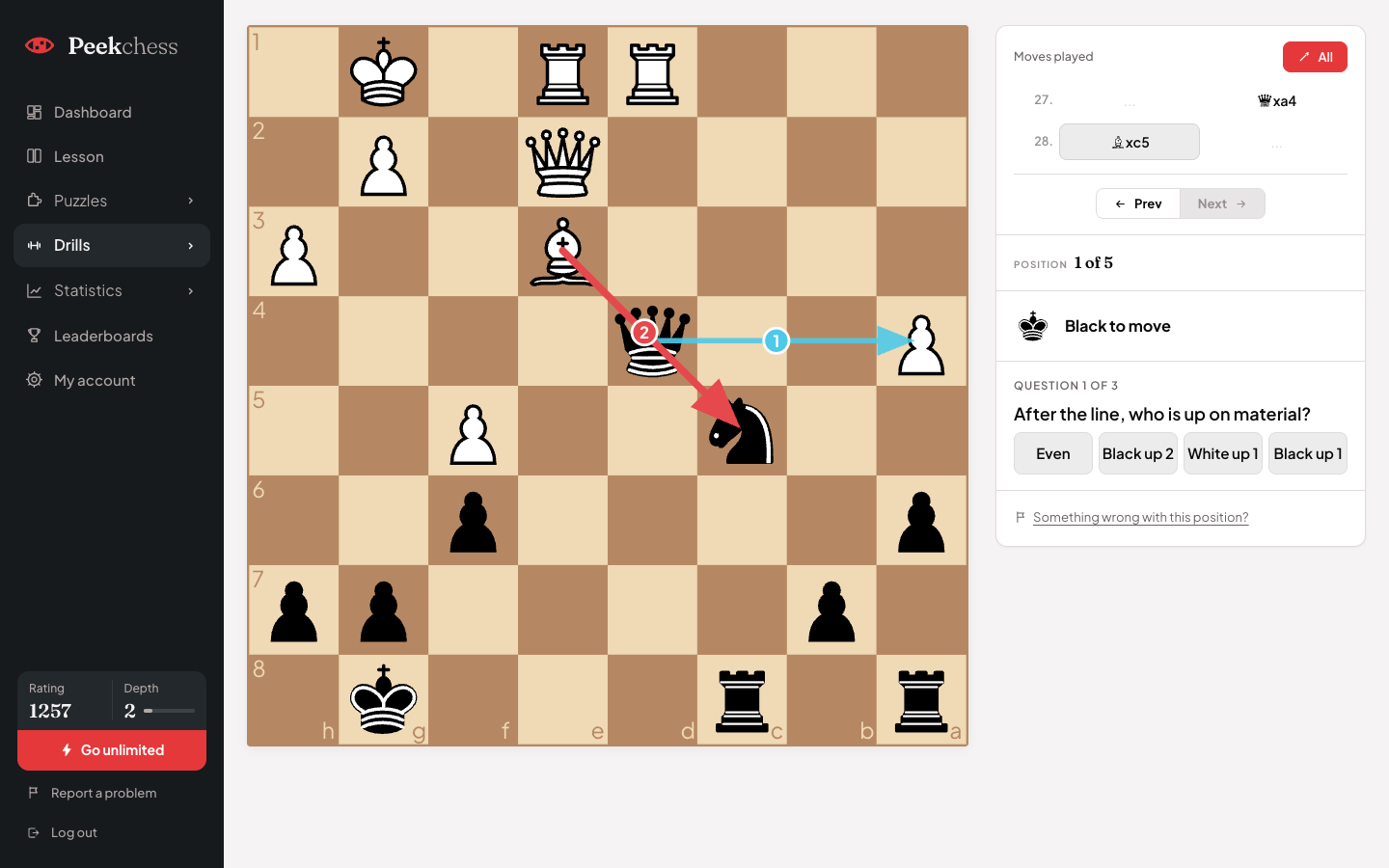
What does the same puzzle look like when you have to calculate it?
Peekchess
- You think the whole line through first
- What you train is what a game asks of you
- You see threats coming and punish mistakes

- You get by thinking one move at a time
- The puzzle rating climbs but the games don't change
- You see the blunder one move too late
In Peekchess the board stays still, so you calculate the whole line first. On most puzzle sites the pieces move, so you can go one move at a time.
How do you train calculation the way you play?
You don't need to stop doing puzzles. Change how you do them with the steps below.
- 1Before you move anything, say the whole line to yourself, covering your move, their best reply, your next move and so on to the end.
- 2Only then play it out.
- 3If the board differs from the line in your head, count it as a miss, even if your first move was right.
It feels slower. That's the point, because the slow part is the part your games test.
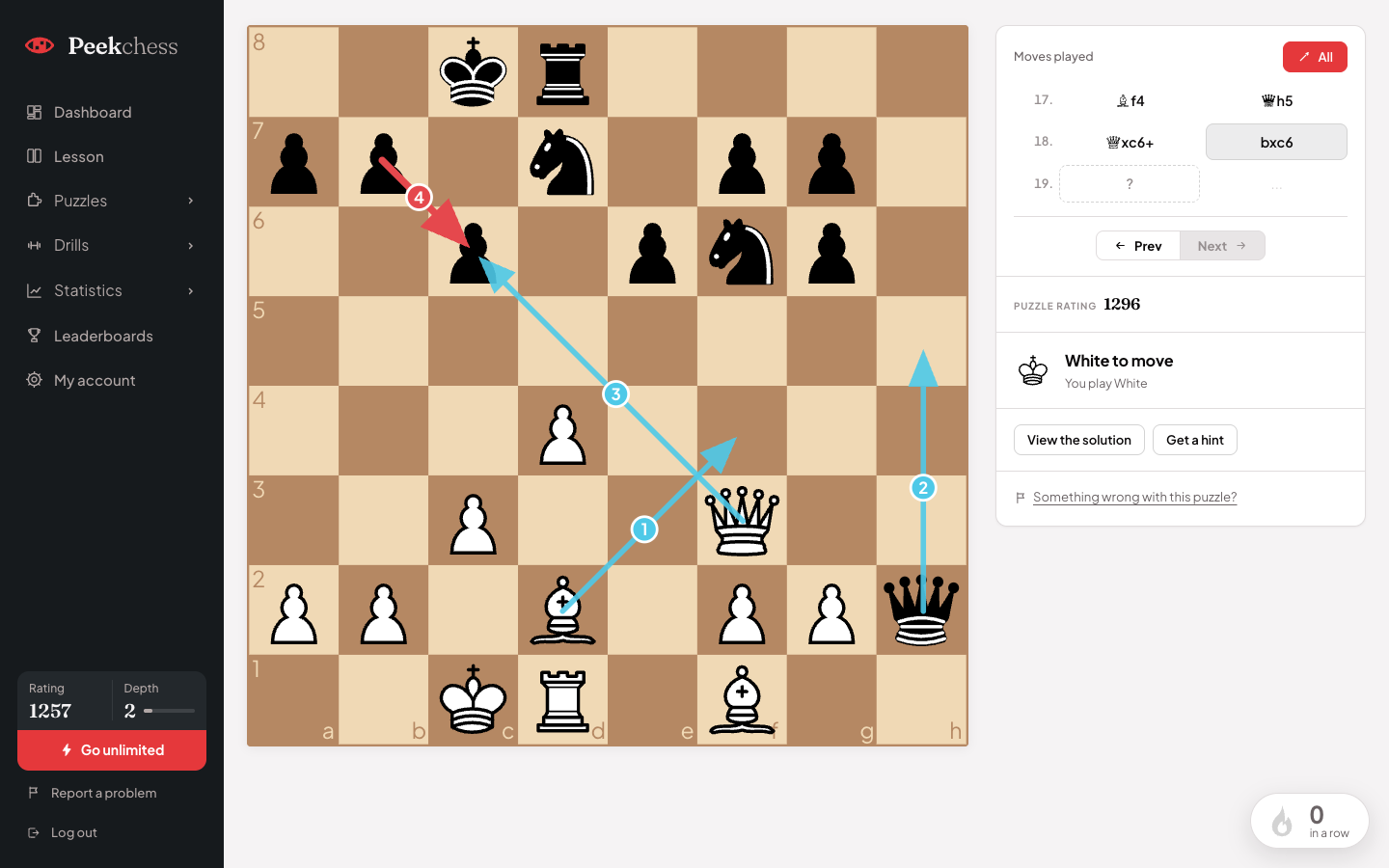
That's why Peekchess puzzles work this way, since you can't play your way to the answer, only see it.
Read next. Do chess puzzles train calculation or just pattern recognition?, Chess Puzzles Where the Pieces Don't Move and Can adults still improve their chess calculation?.