5 chess visualization exercises that carry over to games

In a game, the board is right in front of you. Visualization is moving the pieces in your head on top of it, and keeping track of where they end up. These five chess visualization exercises train exactly that. They go from easiest to hardest, each takes two to five minutes, and every one has a version you can do without an app.
1. Square colours
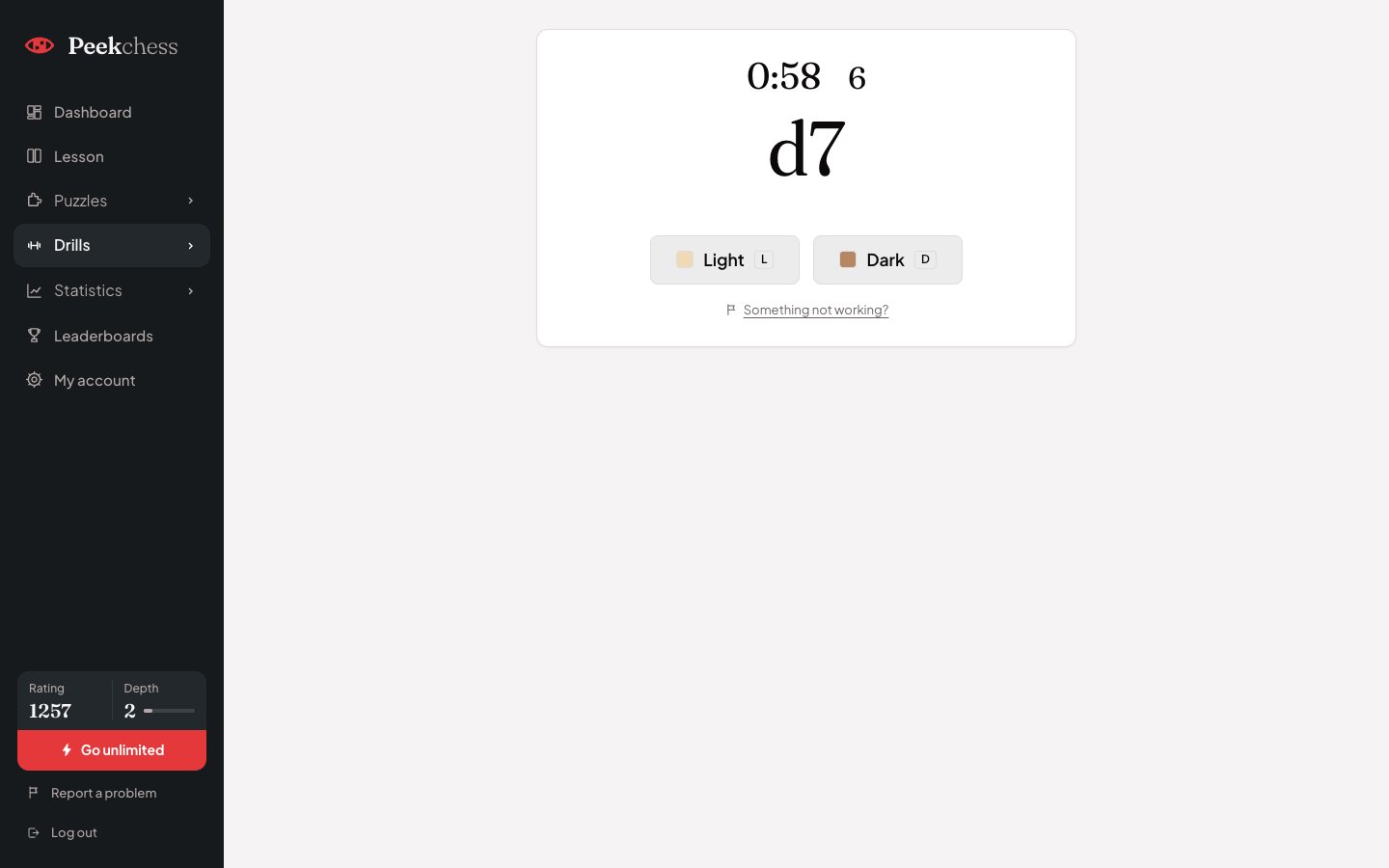
A square is named, say f6, and you say whether it is light or dark, with no board in front of you.
It sounds trivial, but it is the base of everything diagonal. A bishop on c1 can never reach f6 if you can't see that they are different colours.
- Without an app: ask a friend to call out squares, or write a list of random squares and check your answers on a board afterwards.
- In Peekchess: Square colours, against the clock, 1, 2 or 3 minutes.
2. Coordinates
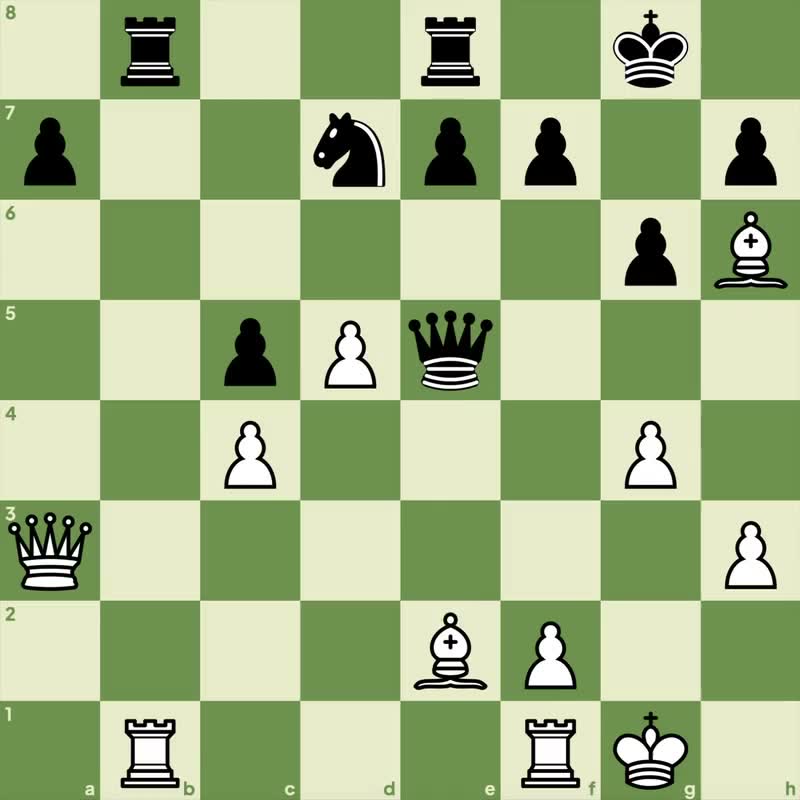
A square is named and you find it on a board with no labels.
You can't picture a line on squares you can't find. Players who calculate well picture any square the moment it's named, from both sides of the board.
- Without an app: turn the coordinates off on the board you play on and name squares as you look at them.
- In Peekchess: Coordinates, as White and as Black.
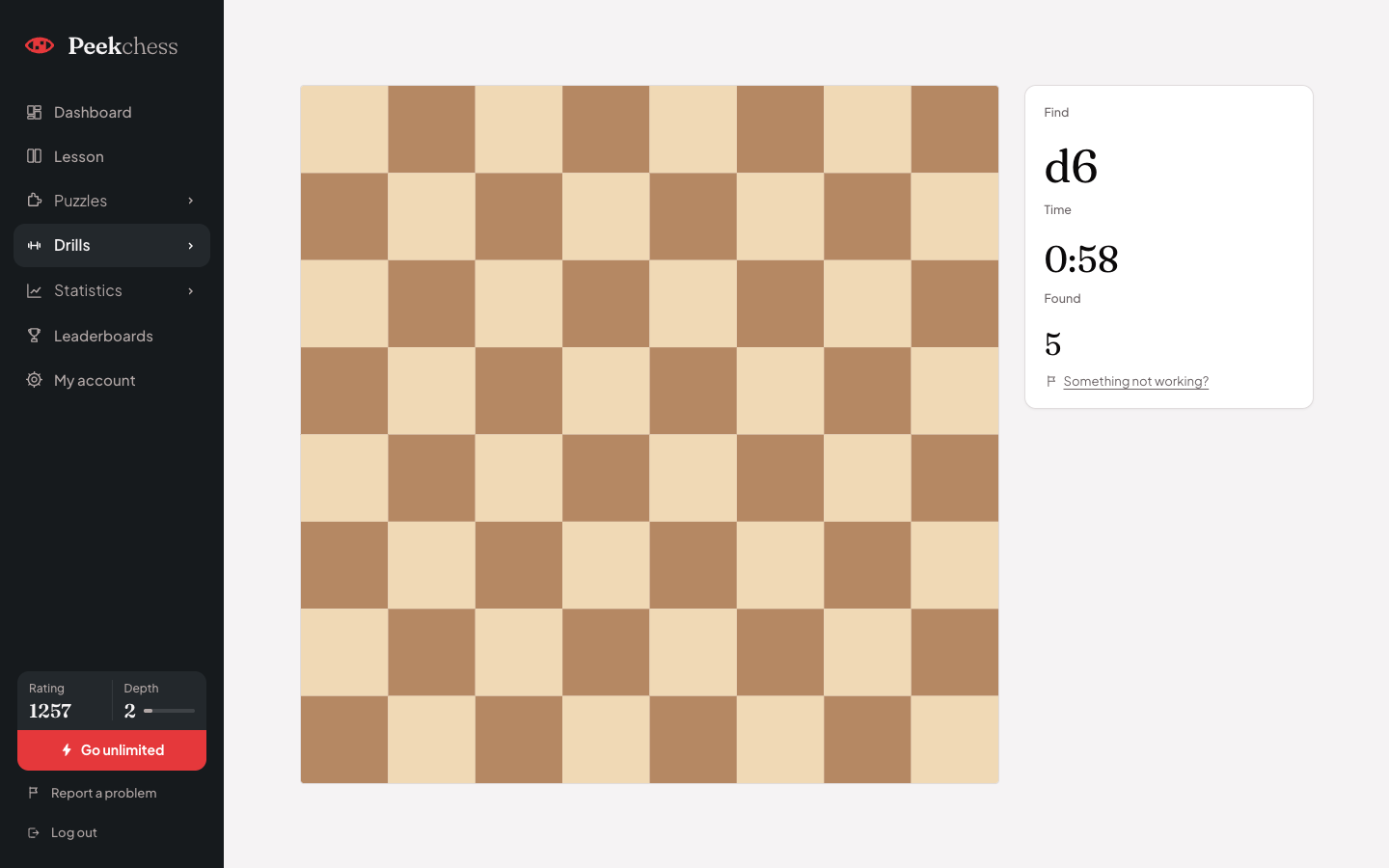
3. Knight checks
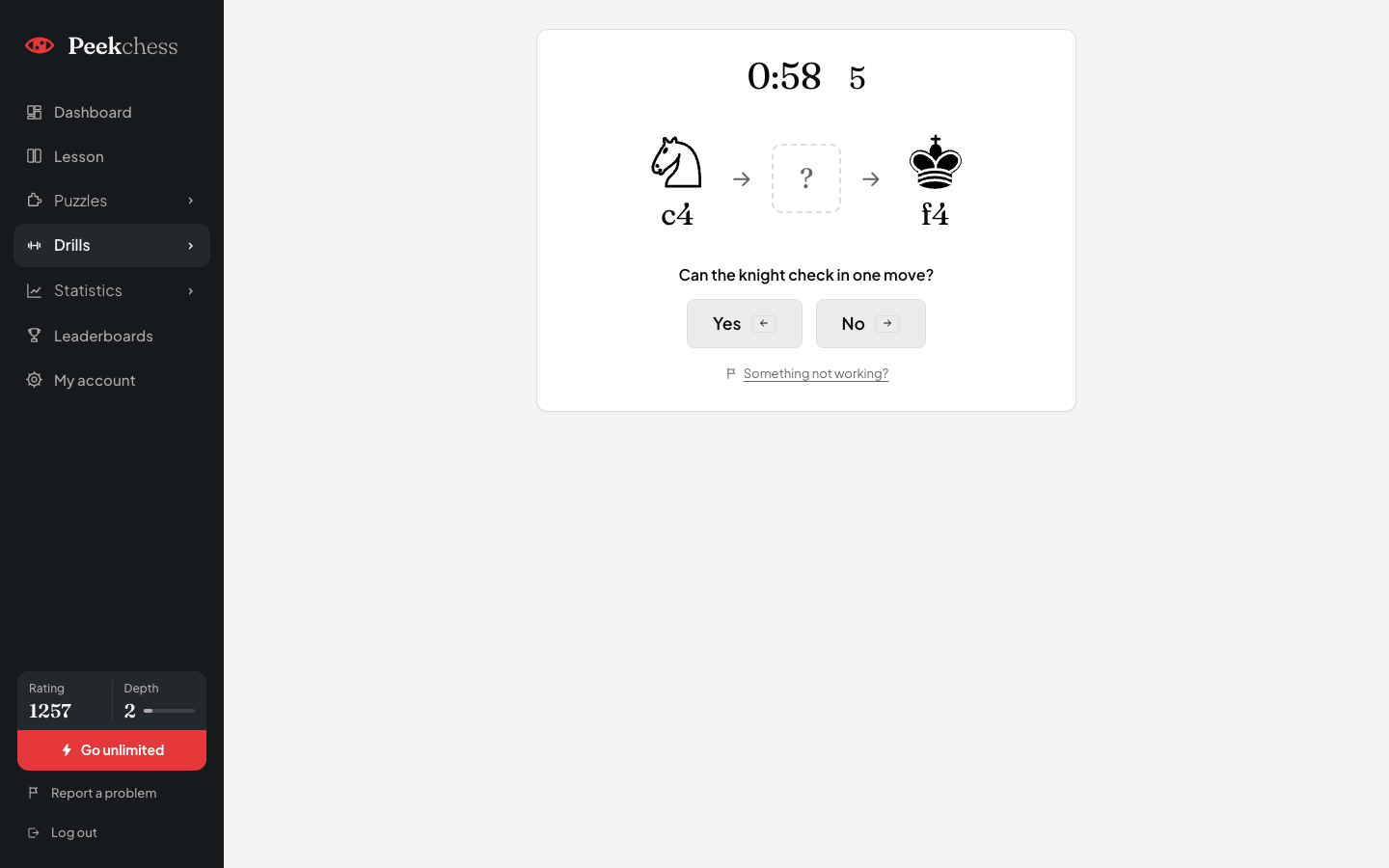
You get a knight's square and a king's square. Could the knight give check in one move? Yes or no.
Knights are the piece players lose track of most, because they don't move in lines. This exercise trains you to see knight jumps in your head, so you stop counting squares in the middle of a calculation.
- Without an app: pick a square for the king, then name every square a knight would need to stand on to check it. Check on a board.
- In Peekchess: Knight checks.
4. Read a line, keep the board still
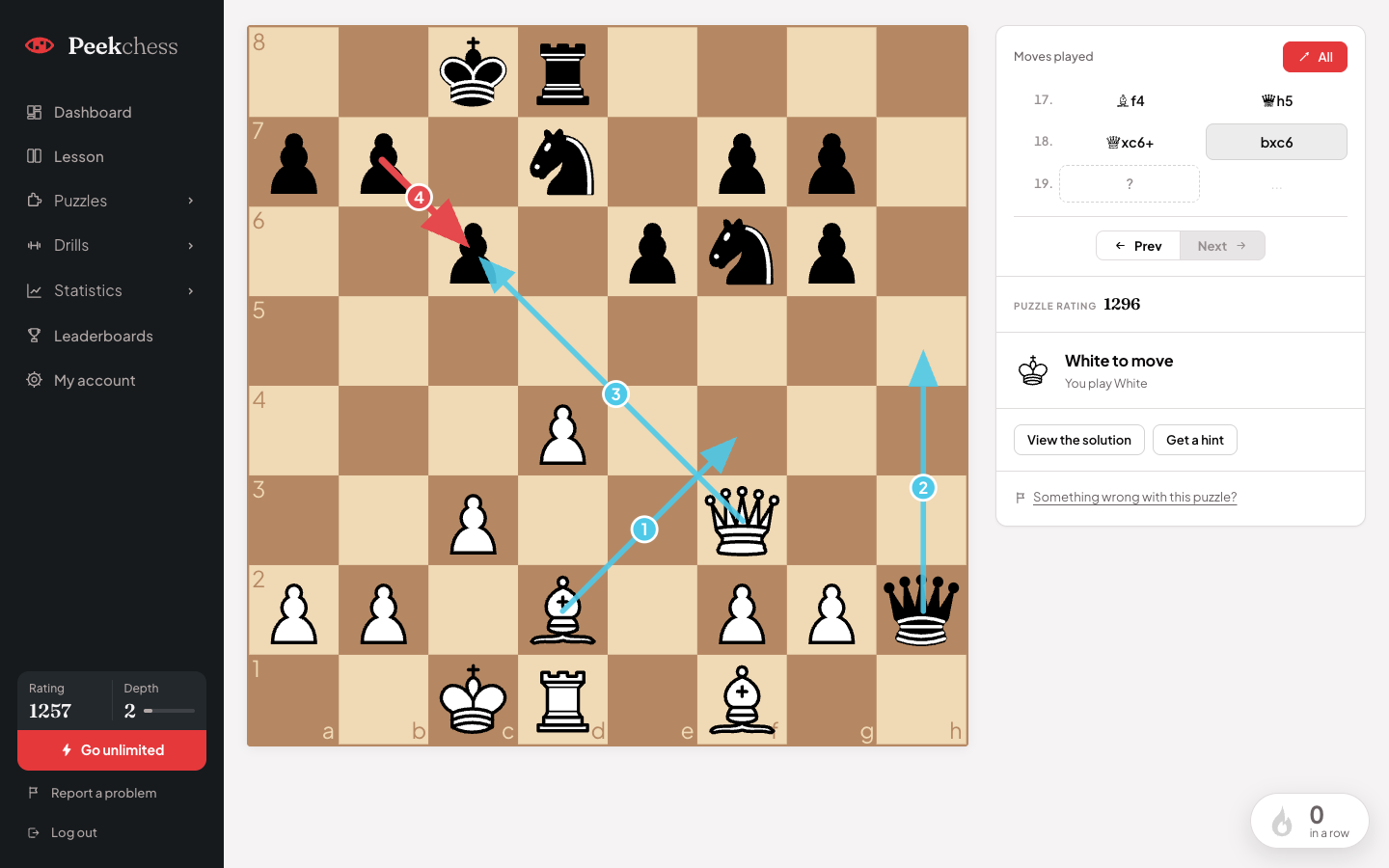
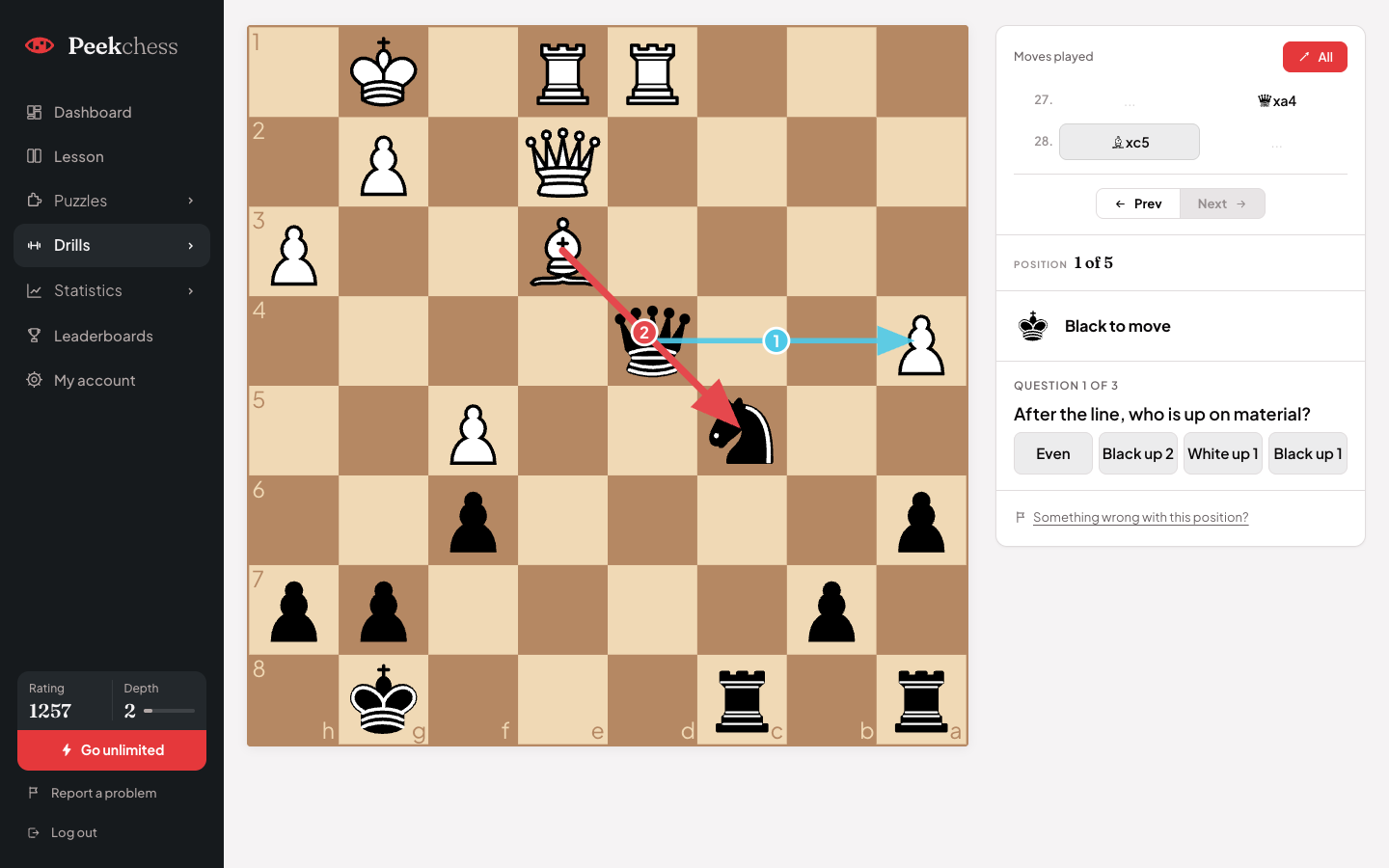
Set up a position from a real game. Read the next few moves from the notation without touching the pieces. Then answer questions about where you ended up: where is the white queen? Which pieces are loose? What can be taken?
This is the exercise closest to a game. You hold only the changes, on top of a board you can see.
- Without an app: use any annotated game. Start with two moves, and add one when you get the answers right.
- In Peekchess: Keeping track, from 2 to 12 moves deep.
5. Spot every capture
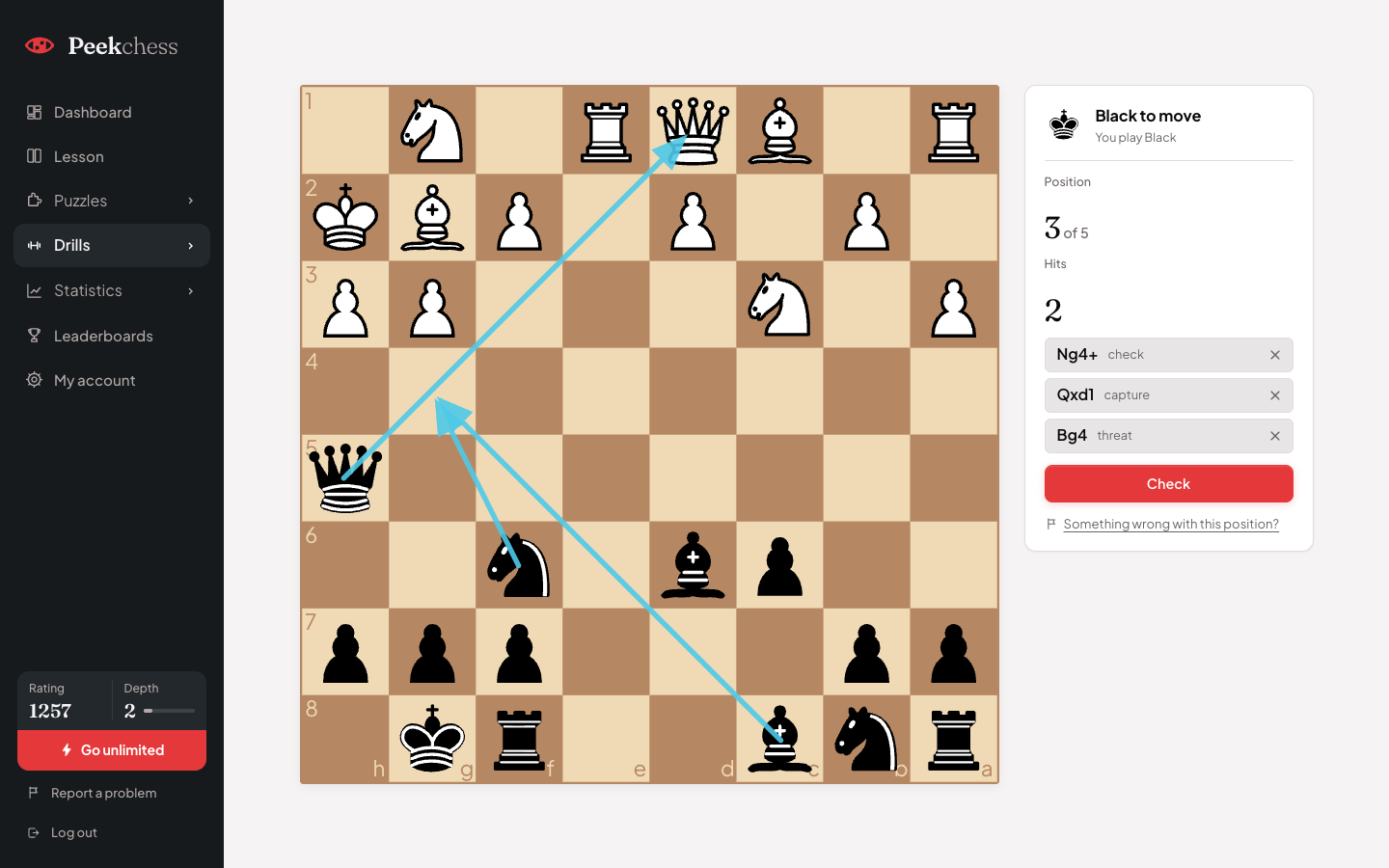
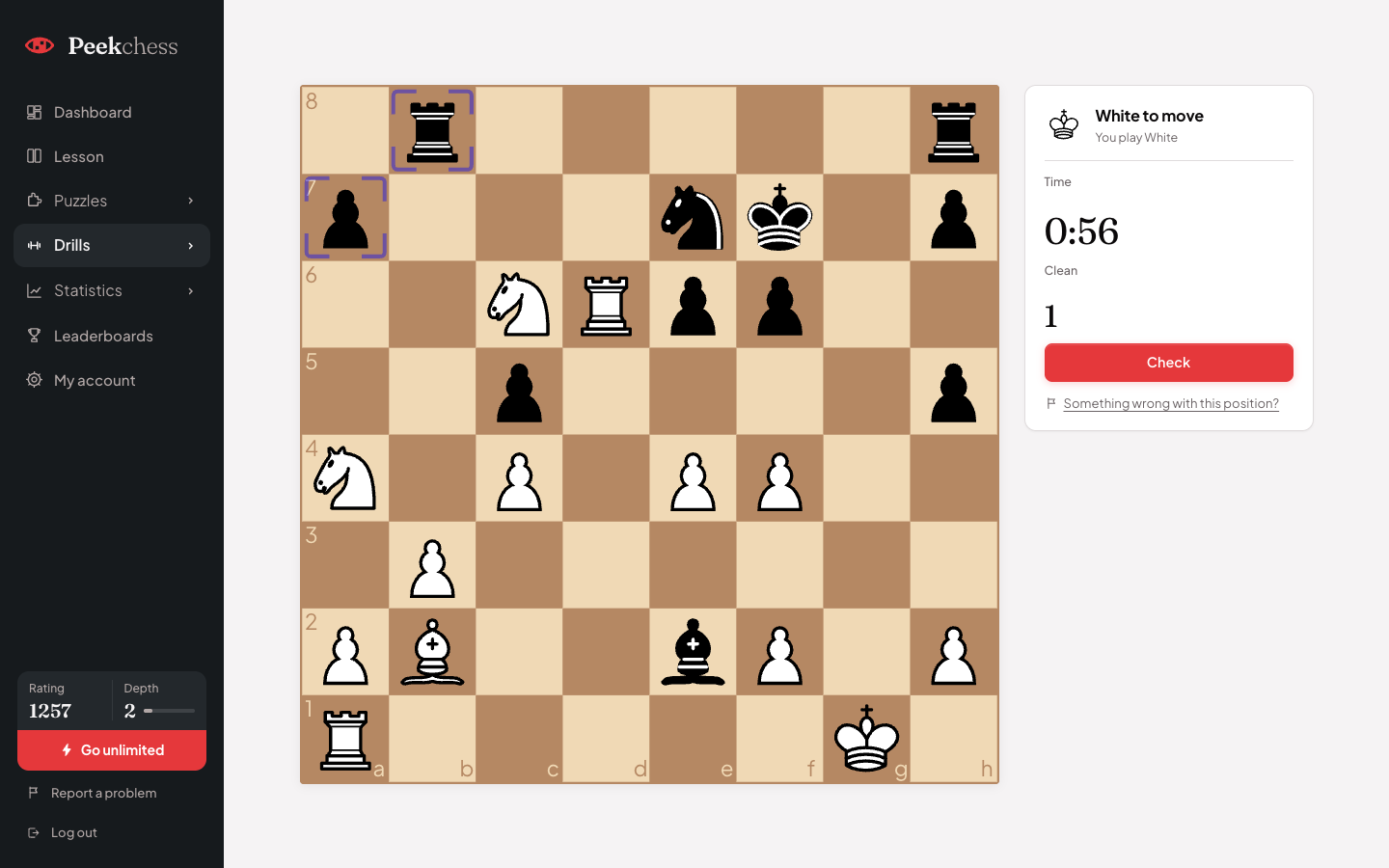
Look at a position and find every enemy piece you can legally take, defended or not.
Most tactics win material, and you can't calculate a capture you never saw. Seeing all of them at a glance is board vision, and it is where most blunders start.
- Without an app: in any position from your games, list every capture for both sides before you look at the next move.
- In Peekchess: Targets, against the clock.
How do you use them?
Do one or two before you play or train, not all five every day. When you get them right most of the time, make them harder: less time, or a longer line.
What I tell my students: if you can't hold the board after three moves, you can't calculate four. Reading a line with the board still is the drill I give first.
When these feel easy, move on to puzzles where the board doesn't move while you solve. That is visualization under a real question. Puzzles work that way, and the 7-day routine puts all of it together.