Visualization in chess: what it is and why it decides games

Visualization in chess is seeing a position that isn't on the board yet. The real board is in front of you. You move the pieces in your head on top of it, and you keep track of where everything ends up.
Every line you calculate depends on it. You can find the right idea and still lose, because three moves in you put a piece on a square it already left.
Isn't that just blindfold chess?
No. Blindfold chess asks you to hold the whole board from memory, with nothing to look at. In a game you never do that. You look at the real position and update it. That's a different skill, and it is the one that wins games.
Blindfold chess training is a party trick goes into the difference.
Why does it decide games?
In our count of 63,109 rapid and classical Lichess games, 60 of every 100 losses came from a tactic, and 73% of those tactics were only one or two moves deep.
Those are short lines. The loser usually didn't fail to see far enough. They saw the position after one or two moves wrongly: a defender that wasn't there, a square they thought was covered, a piece they forgot had moved.
Is visualization your weak spot?
- You find the right idea, but the move doesn't work when you play it.
- In your head, a piece is still on the square it just left.
- You solve puzzles well when the pieces move, but miss the same patterns in games.
- You lose track of the position after a capture or a knight move.
How is it different from calculation?
Calculation is choosing which moves to look at and judging where they lead. Visualization is holding the board steady while you do it. You need both, but calculation breaks down the moment the picture does. The step-by-step calculation guide covers the first half.
How do you train it?
Train it the way a game asks for it: the real board in front of you, the pieces moving only in your head, one move deeper at a time.
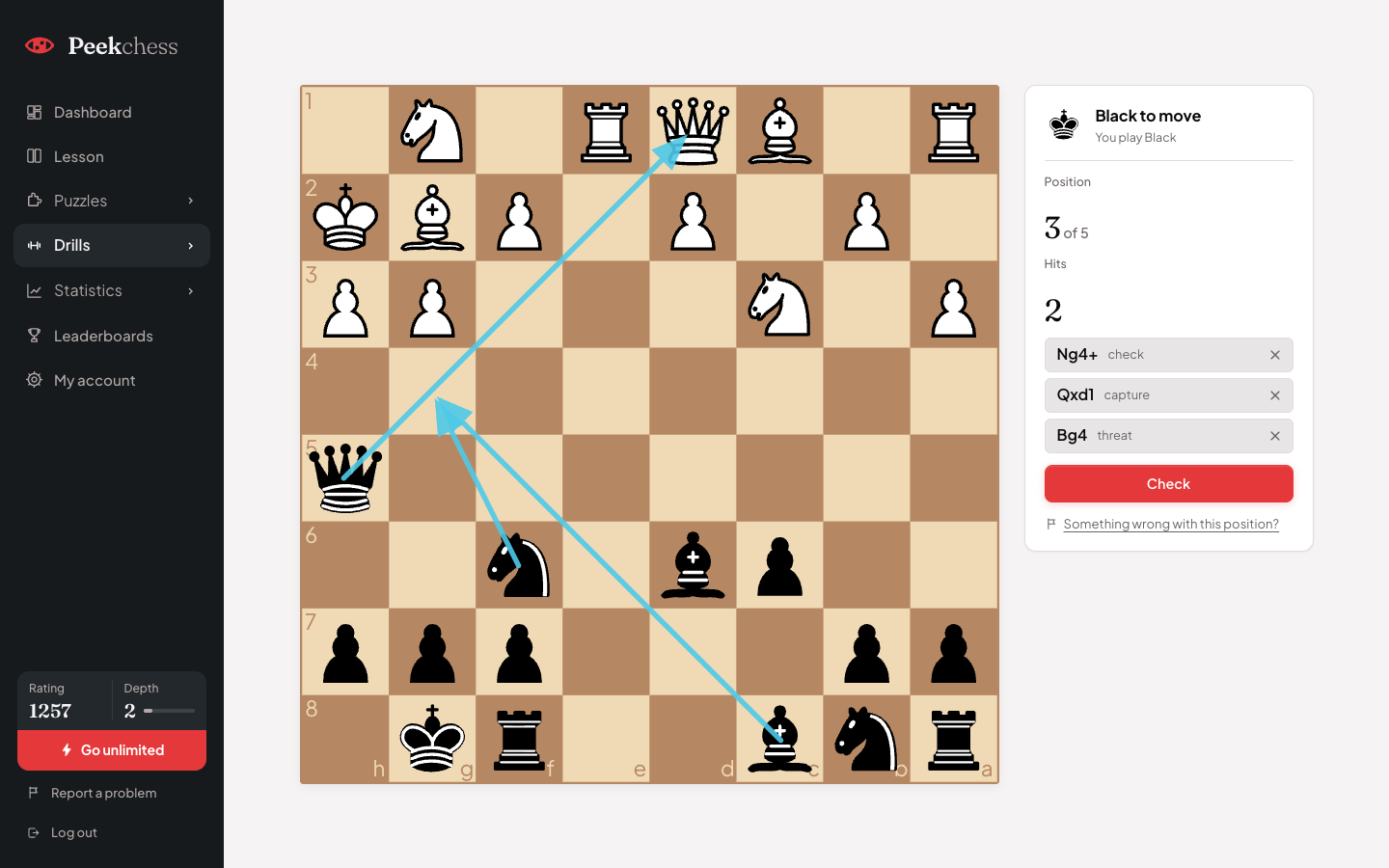
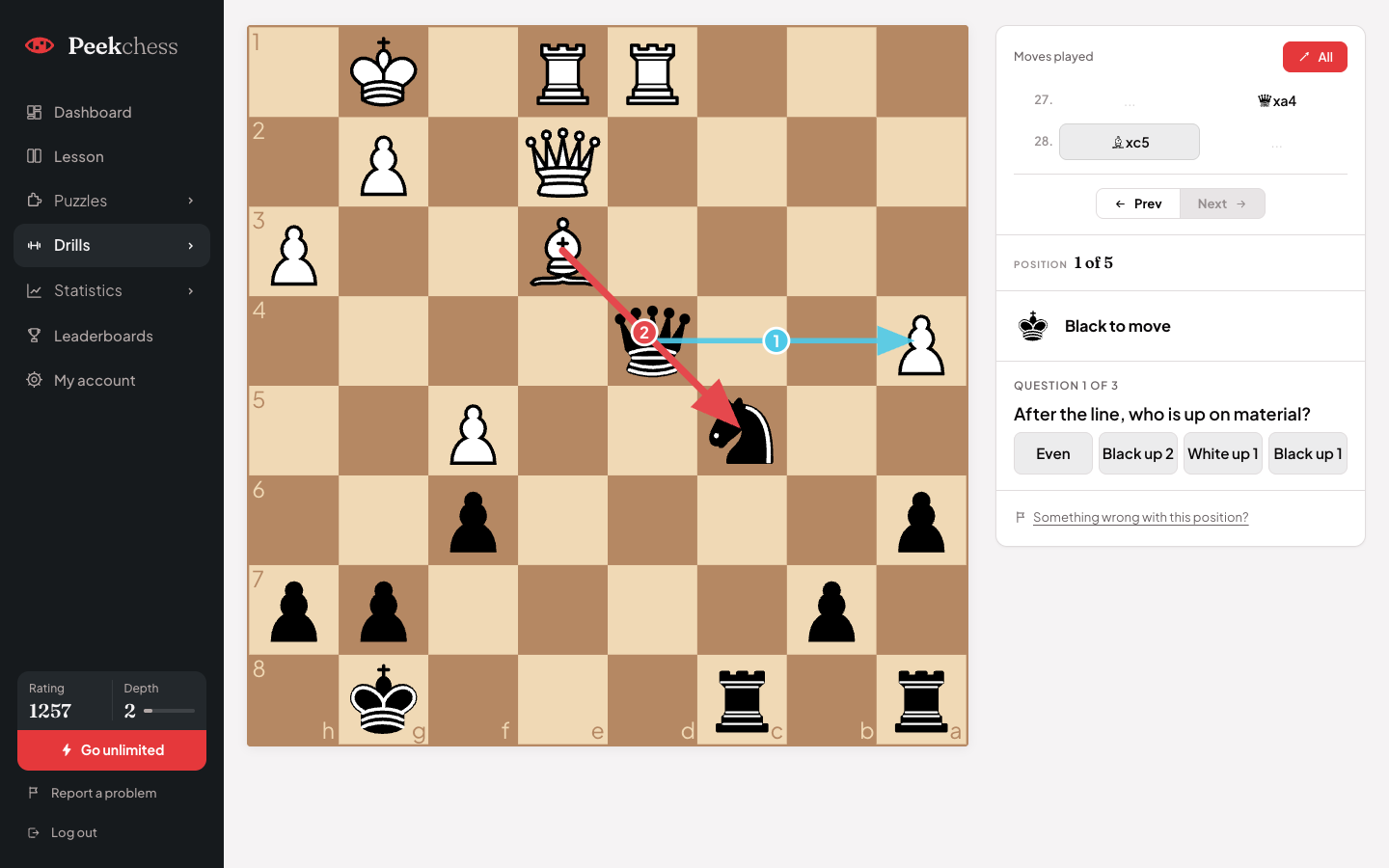
- Start with five chess visualization exercises, each with a version you can do without an app.
- Put them together with the 7-day routine.
- Then solve puzzles where the board doesn't move while you solve.
Peekchess
- You think the whole line through first
- What you train is what a game asks of you
- You see threats coming and punish mistakes

- You get by thinking one move at a time
- The puzzle rating climbs but the games don't change
- You see the blunder one move too late
When my students miss a fork, it's rarely the move itself. They never asked what the knight could reach next. Knowing the pattern is rarely the problem. Seeing where the pieces will be is.
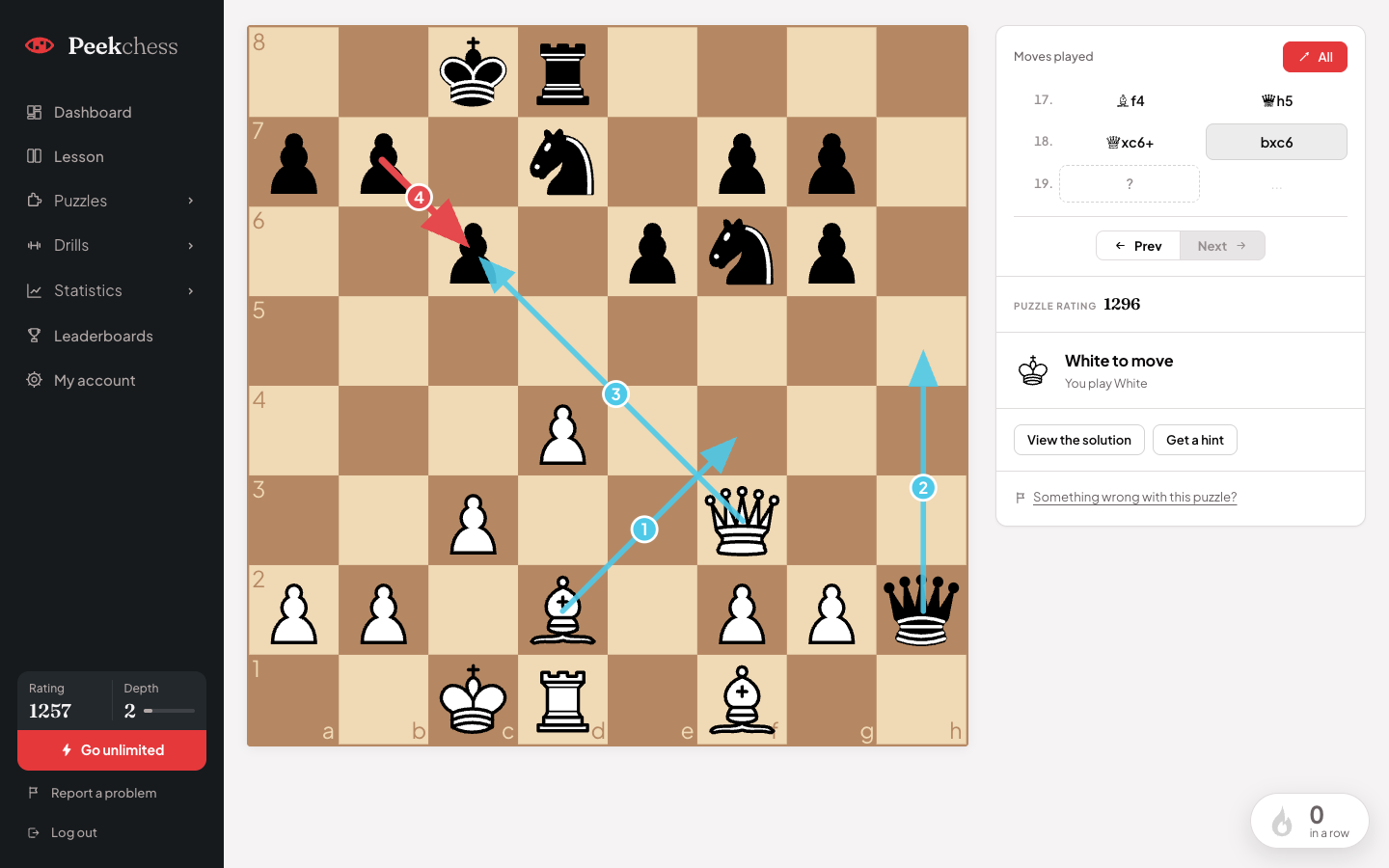
In Peekchess the board freezes: the first moves of each puzzle land as arrows and you find the win in your head. Every puzzle is visualization practice, at a depth that climbs as you solve. See how the method works.