How to improve chess visualization: a 7-day routine
Visualization gets better the way endurance does: a little, often, a bit harder each time. Most players try it the other way round. They do one long blindfold session, give up, and go back to puzzles where the pieces move for them.
Here is how to improve chess visualization in a week, fifteen minutes a day. A week won't make you a different player. It will show you exactly where your picture of the board breaks, and that is what you train from then on.
What are the rules for the week?
And check every answer. A line you never check is a line you only think you saw.
What does the week look like?
- 1Day 1: Square colours, then Coordinates as White, then 5 puzzles with the board still, 2 moves deep.
- 2Day 2: Knight checks, then Coordinates as Black, then 5 puzzles, 2 moves deep.
- 3Day 3: read a line 3 moves deep and answer questions about it, then 5 puzzles, 3 moves deep.
- 4Day 4: spot every capture in a position, then read a line 4 moves deep, then 5 puzzles, 3 moves deep.
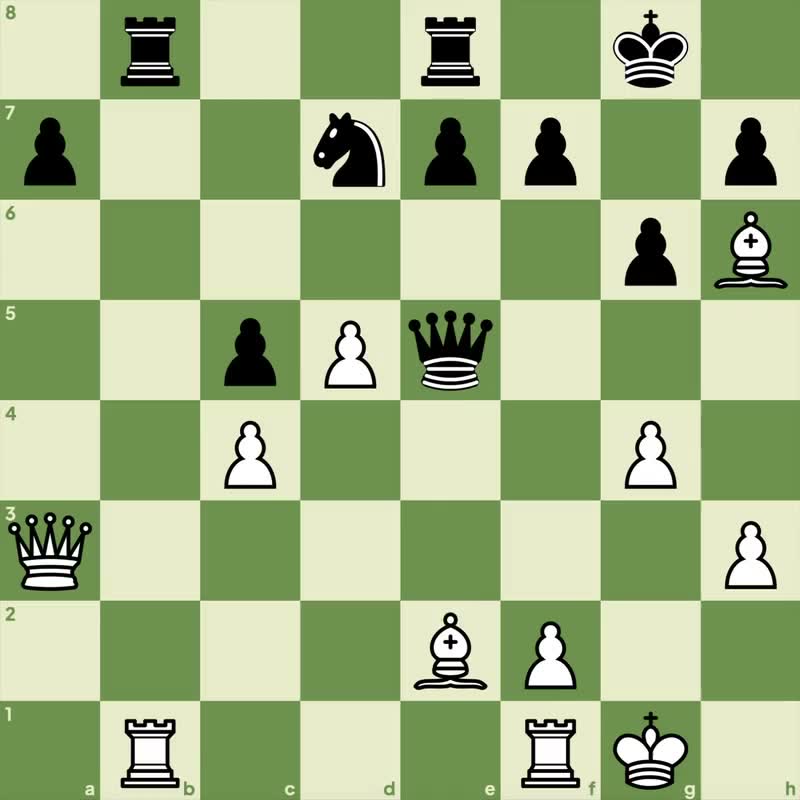
- 5Day 5: three positions through the whole calculation process: is there a tactic, candidate moves, the line, the evaluation.
- 6Day 6: one of your recent losses. Stop at the move that lost, and work out the reply you missed without moving the pieces.
- 7Day 7: 5 puzzles one move deeper than on day 1. Write down which piece you lost track of, if any.
Each day takes about fifteen minutes. The exercises are described in five chess visualization exercises, each with a version you can do without an app.
What do you do after the week?
Look at your notes from day 7. Most players lose the same piece every time: the knight that jumped, or the bishop that moved two moves ago. Keep doing the exercise that trains that piece, and keep the puzzles one move past where you are comfortable.
Every player I coach stops one move too early, at every level. This routine is the same training I do with them by hand: one move further than is comfortable, every day.
Can you do it in Peekchess?
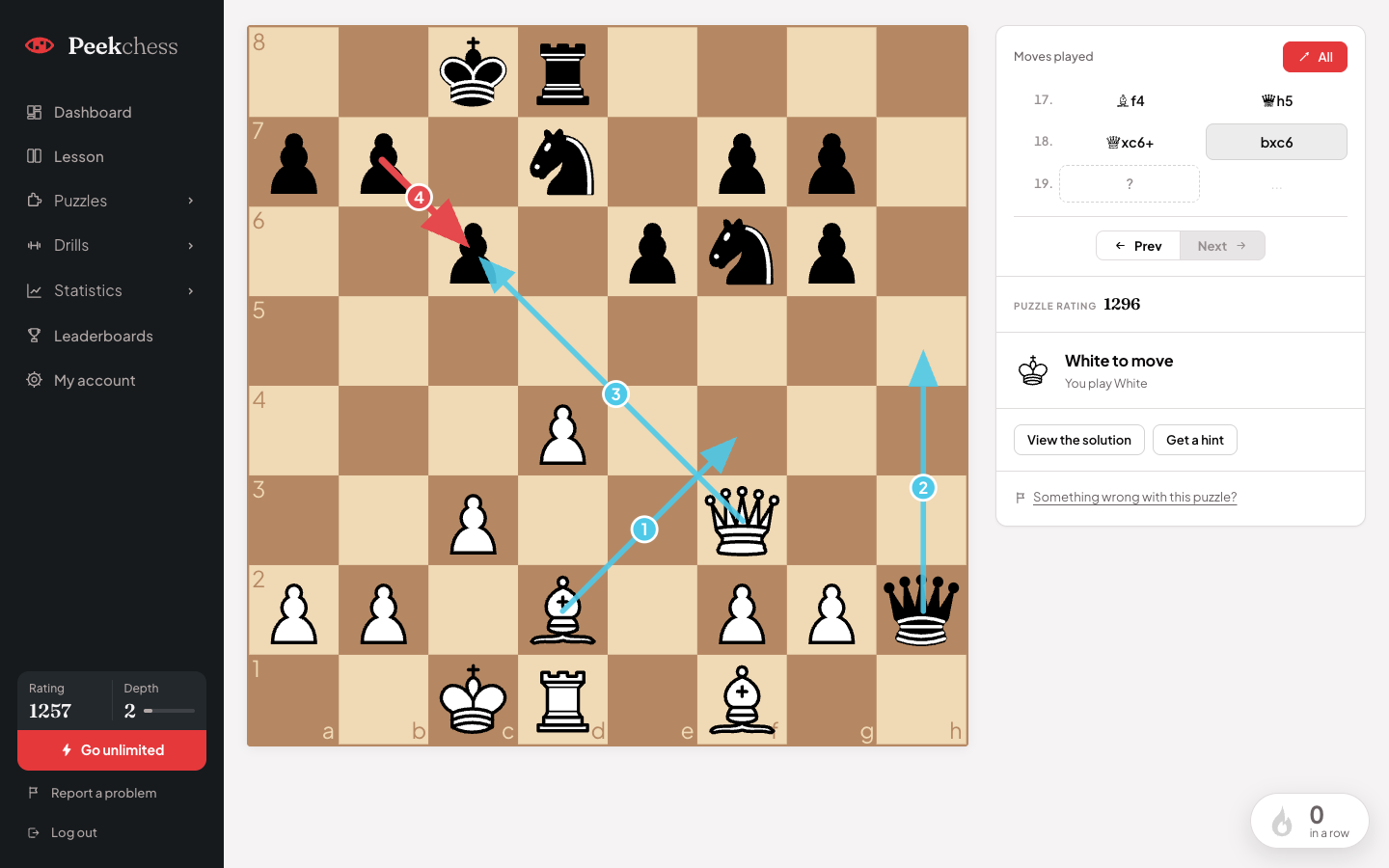
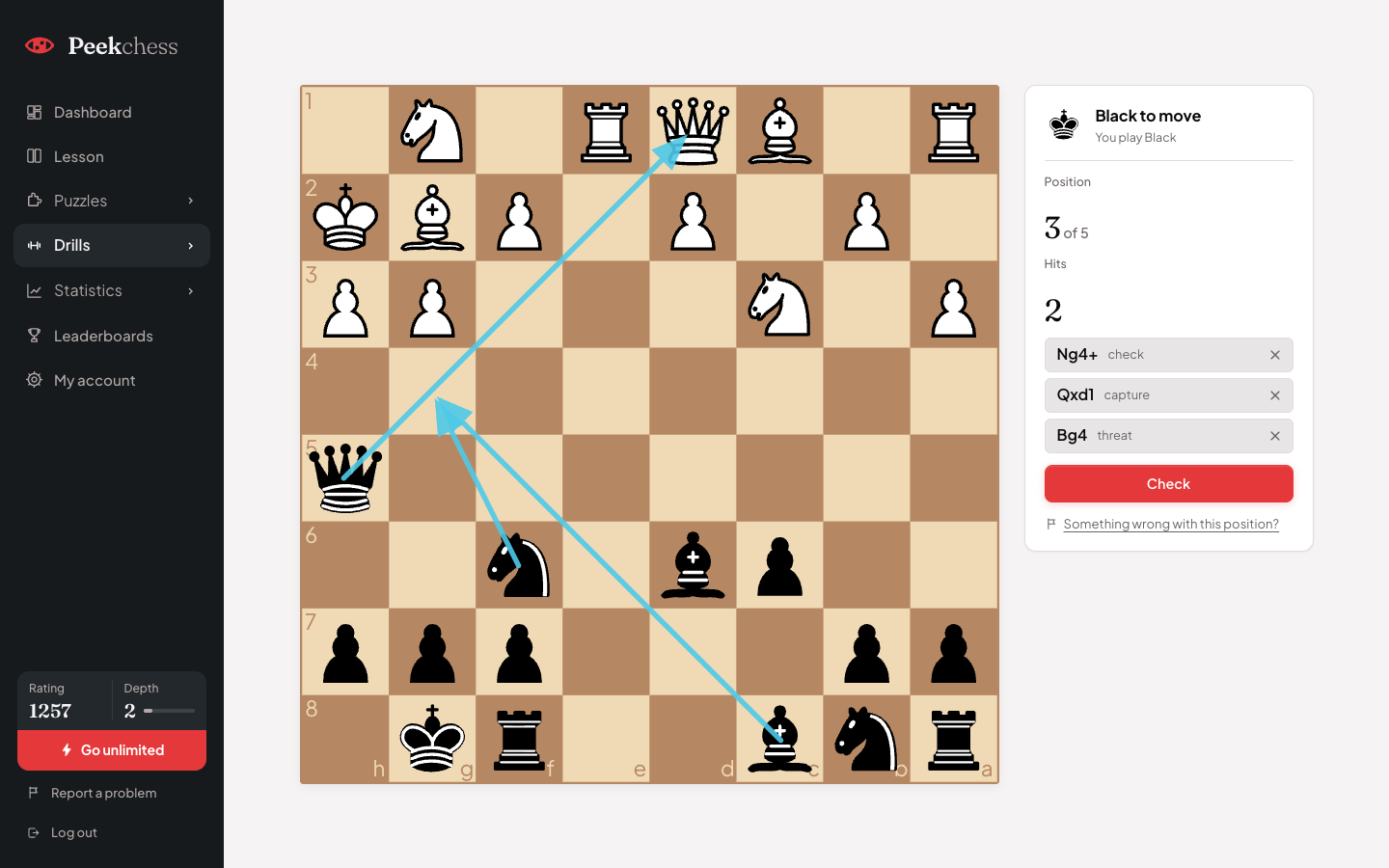
Every step of the routine is a mode: Square colours, Coordinates, Knight checks, Keeping track, Targets and the Calculation process. In Puzzles the board freezes and the first moves land as arrows, so every puzzle is visualization practice, and the depth climbs as you solve.