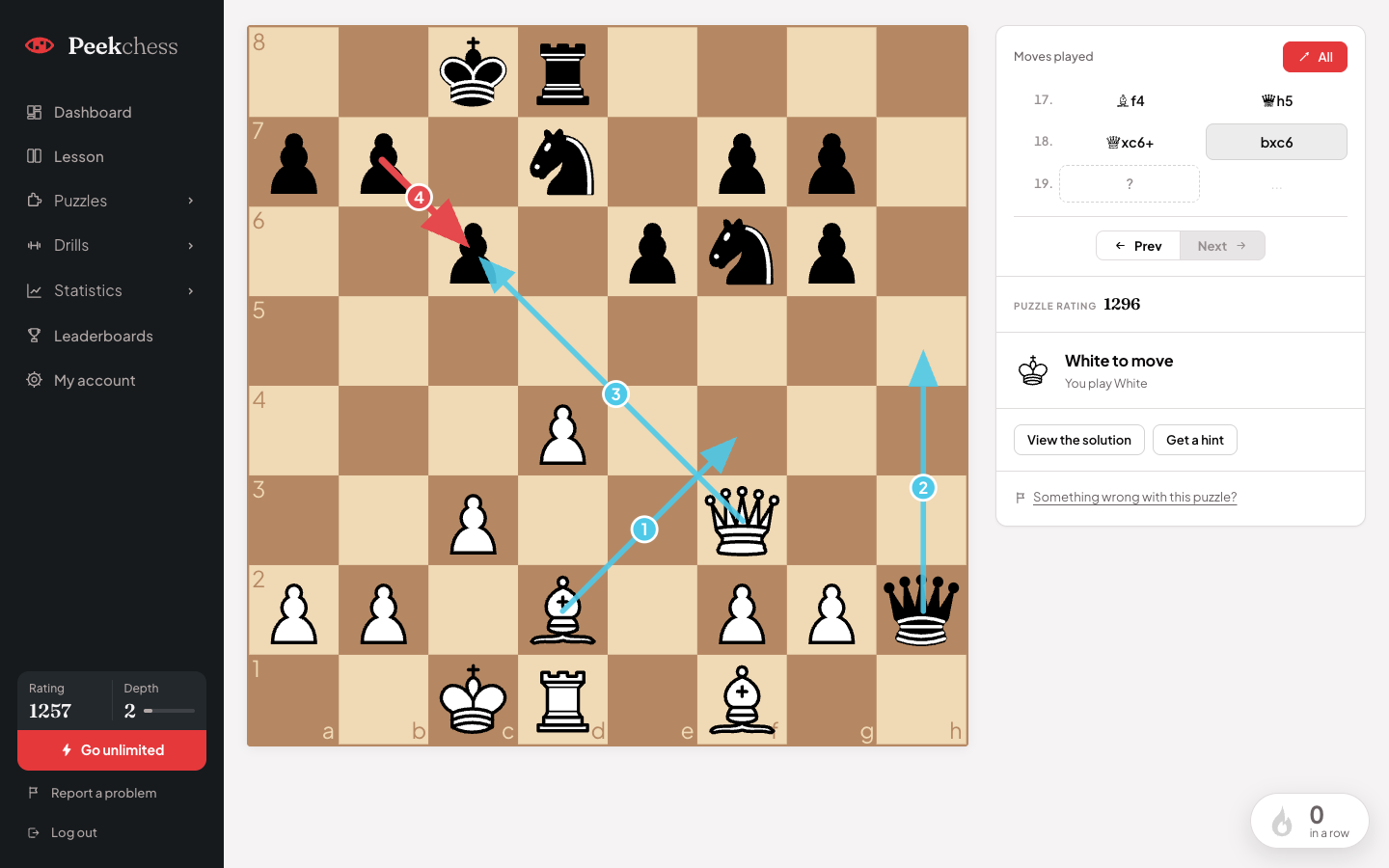
How to stop blundering in chess: three questions

How to stop blundering in chess: before every move, ask what checks, captures and threats each side has. In our count of 63,109 games, 60 of every 100 losses came from a tactic, and 73% of those tactics were only one or two moves deep. Short tactics like these are what this habit catches.
Before every move, ask three questions. Ask them for both sides.
1. What checks are there?
Start with checks, because they force a reply. A check can fork a second piece, win a loose one or start a mating attack. Knight checks are the easiest to miss: Knight checks trains exactly that.
2. What can be taken?
Look at every capture, even the ones that look silly. A capture that seems to lose material can win it back a move later, and a piece you think is defended may not be once something moves. Targets has you find every capture on the board, against the clock.
3. What are they threatening?
Their threats are the half players skip. Before you look for your own idea, look at their last move. What does it attack? What did it stop defending? What line did it open? Puzzles in Threats mode have you play the attack your opponent is about to make.
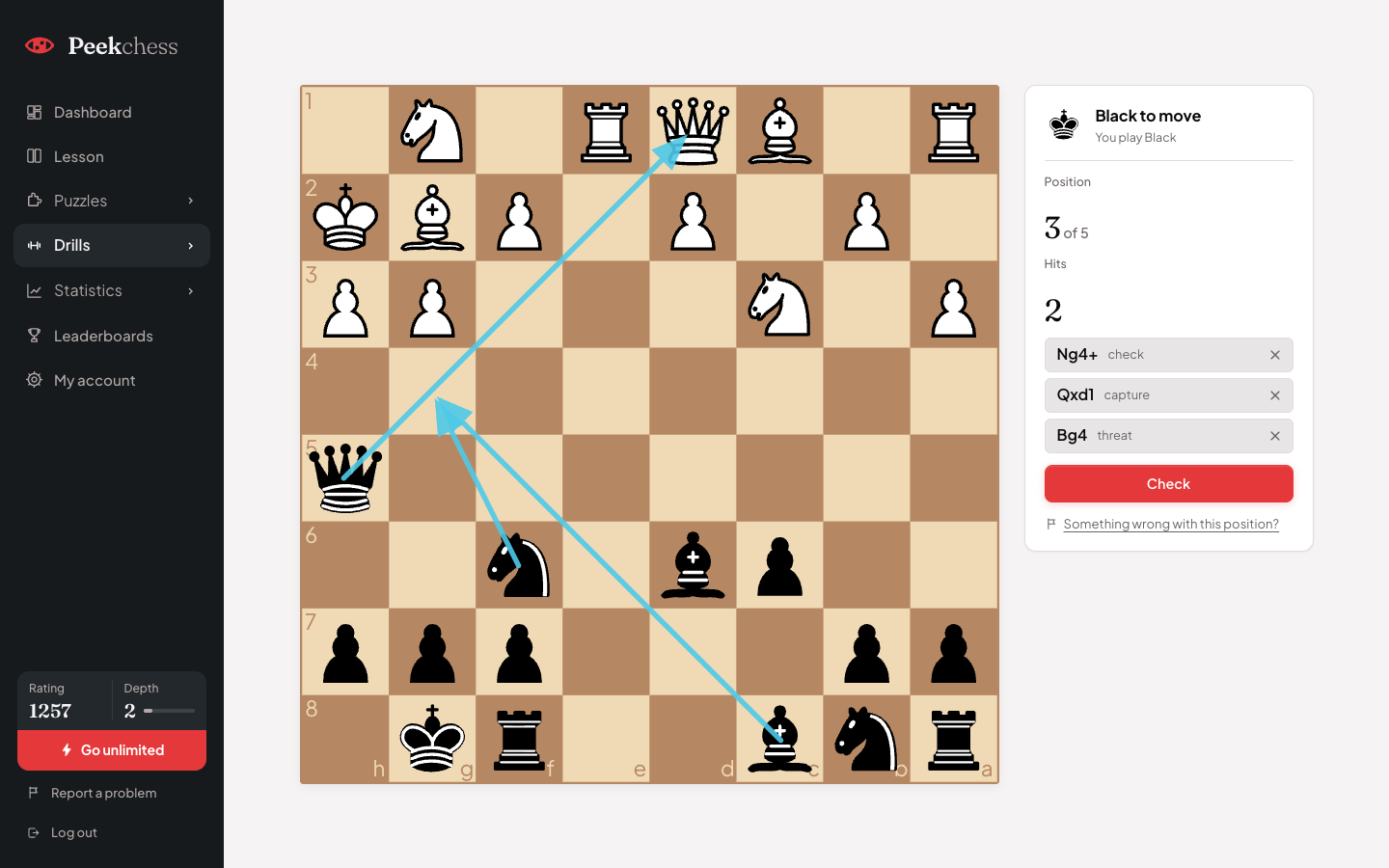
How do you blunder-check a move?
When you've chosen a move, don't play it yet:
- 1Picture the board after your move.
- 2Find every check, capture and threat your opponent would have.
- 3Make sure you have an answer to each one.
- 4If you don't, choose again.
It feels slow at first. With practice it gets quicker, until it's simply how you look at a position.
How do you do it in a fast game?
In a fast game there's no time to run through a list. The habit is built in training, on every position, until it runs without you thinking about it. That's what Forcing moves and the Calculation process are for.