Blindfold chess training is a party trick.Calculation isn't.

Blindfold chess training is a great party trick, and plenty of players use it to calculate better. As a coach, I don't think it helps much: it trains remembering a position, and a game asks you to calculate over the board in front of you. Here's why.
What does a game actually ask?
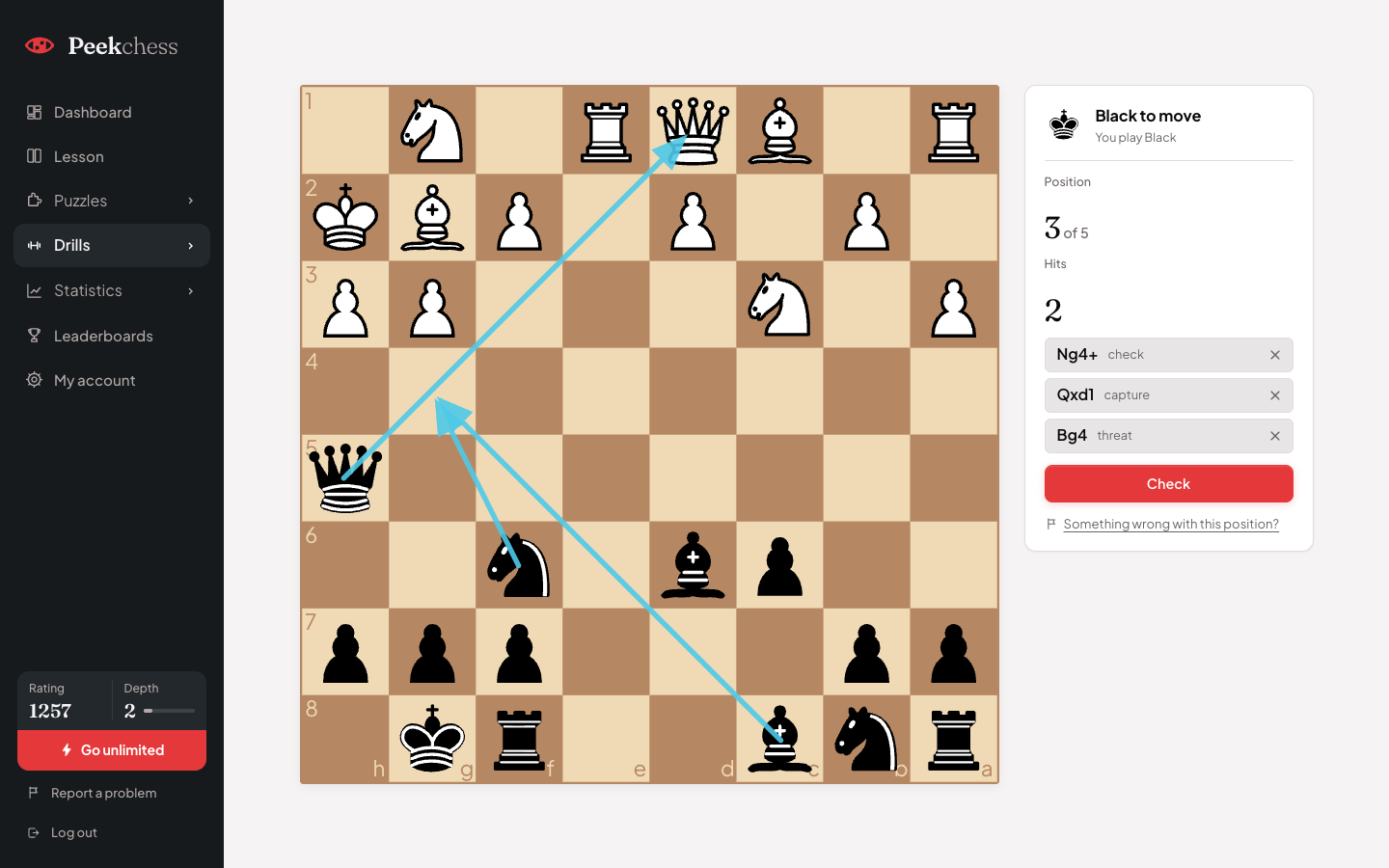
When you calculate in a game, the board is right in front of you. You look at the real position and move the pieces in your head on top of it.
Does blindfold chess train visualization?
Blindfold asks you to hold the whole board from memory, with nothing to look at. That's a different skill: remembering a position, not updating the one you can see.
The second is harder than it sounds. The board keeps showing you the old position: a piece that moved in your head still sits on its square in front of you. That's how you miss that it no longer guards anything.
One of my students could hold a whole position blindfold, yet kept missing tactics with the board right in front of them. The pieces got in the way: what they saw on the board kept overruling the line in their head.
What should you train instead?
- 1Look at the real board, not away from it.
- 2Play the line in your head, move by move, over the position you can see.
- 3At the end, ask what changed: which pieces moved, and what they no longer guard.
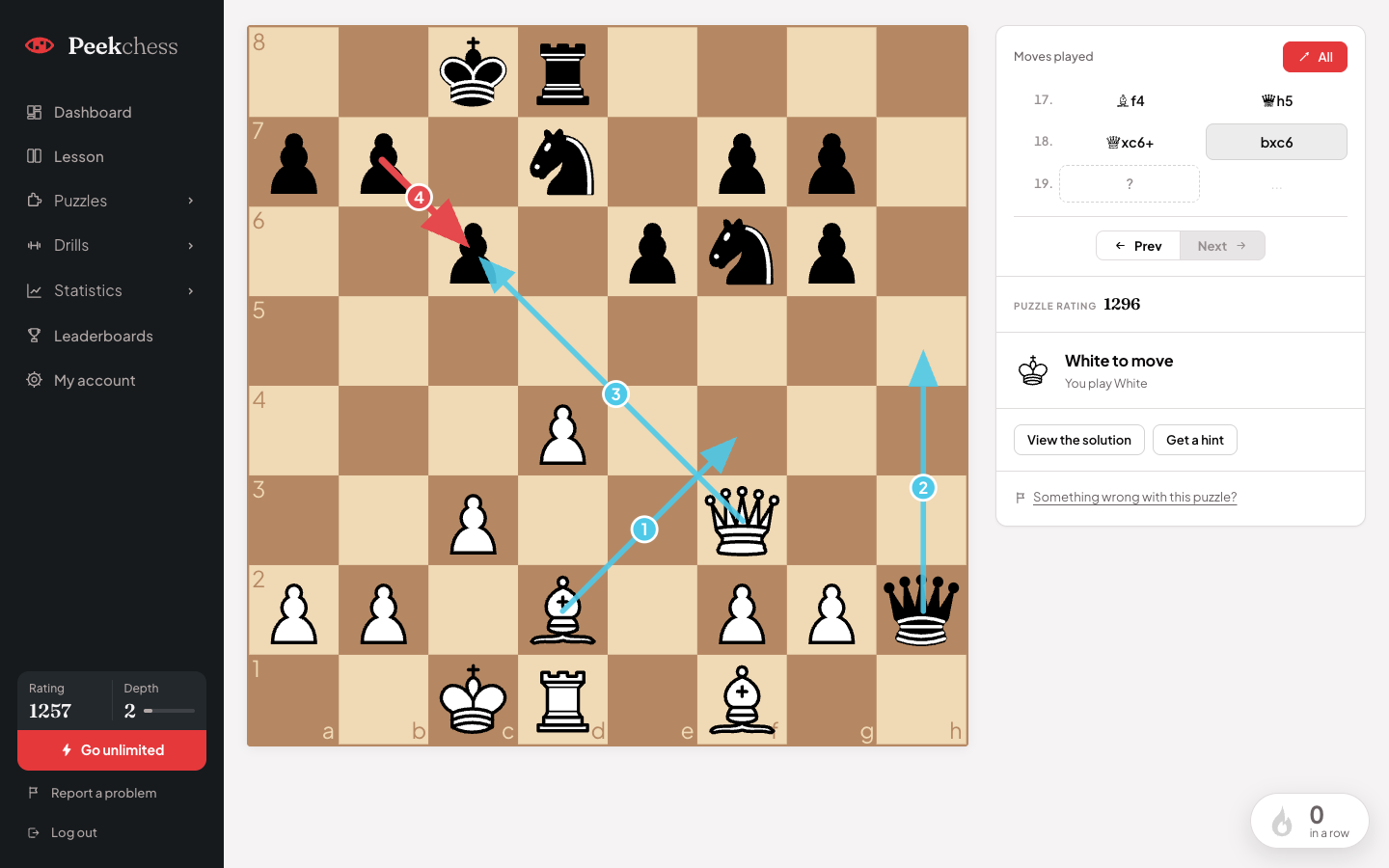
That's what Puzzles and Keeping track train in Peekchess: the board you can see, and the one in your head.