Why am I not improving at chess?Tactics, not openings

Why am I not improving at chess? Look at what games are actually lost to: in our count, 60 of every 100 losses came from a tactic and 7 from the opening. Openings feel like the thing to study, because there's always another line to learn and a quick loss feels like an opening problem.
How did we count?
63,109 decisive rapid and classical games from Lichess, all played in August 2026 and all with engine evaluations. We checked them with Stockfish.
Every loss went into one group. Two of them matter most here:
- Tactic: the loser dropped material or walked into mate.
- Opening: the loser was already lost by move 15, with no big mistake.
What are games lost to?
Out of every 100 lost games:
- 60 were lost to a tactic.
- 7 were lost to the opening.
- 10 were outplayed slowly.
- 23 were lost some other way.
Blame the opening for every unclear early loss as well, and it still only reaches 12.
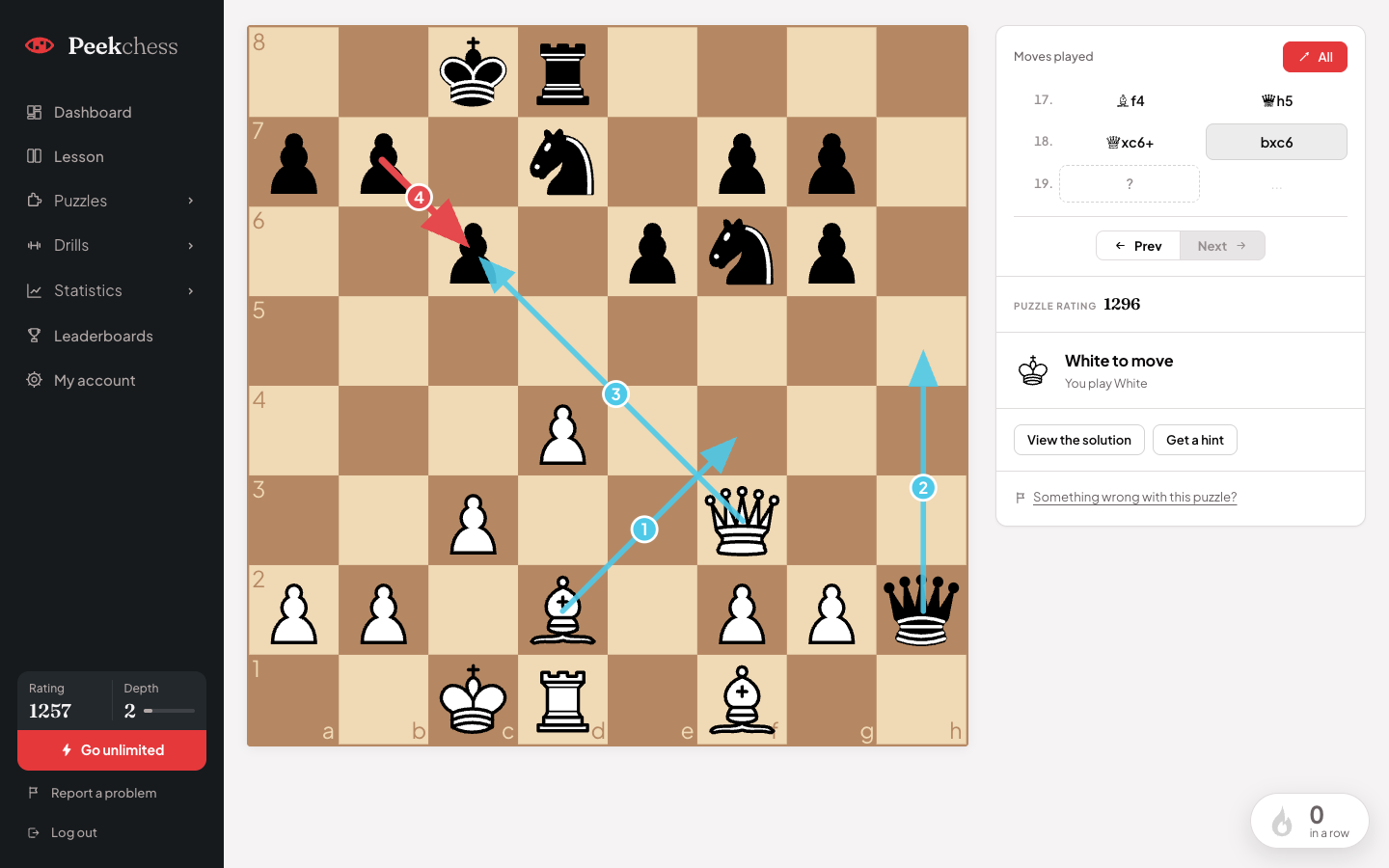
The tactics weren't deep, either: 73% of the game-losing tactics were one or two moves deep. Most of the time, the loser wasn't out-calculated in a long combination. They missed the reply.
How much is an opening edge worth?
Say your preparation works and you're half a pawn to a pawn better at move 15. In these games, that scored 58%.
Now start from a level position and make one blunder. That scored 28%.
An opening edge moves your score a little. One blunder moves it a lot more.
What should you study instead?
The cheapest rating you'll ever gain isn't a new opening. It's not missing the reply.
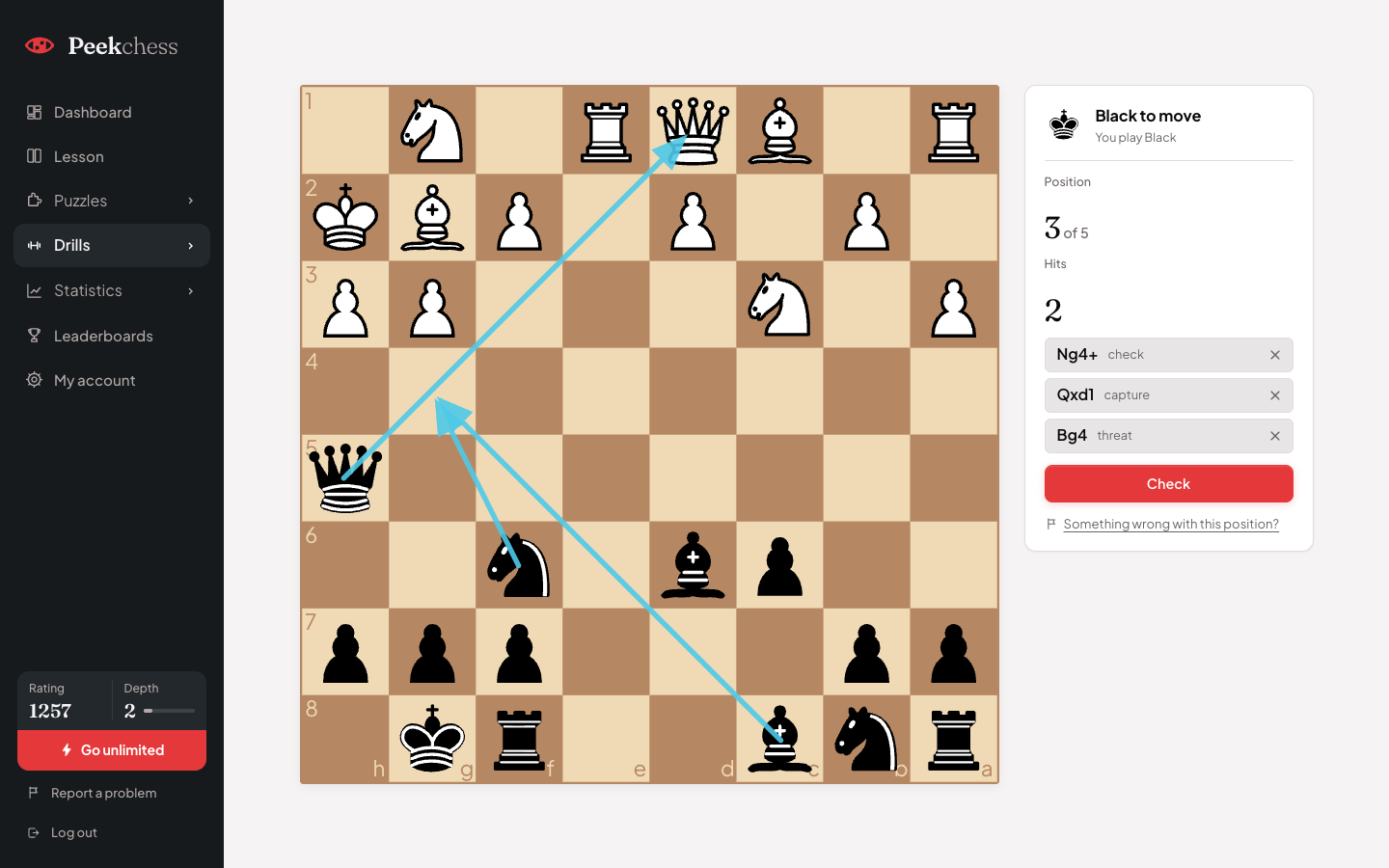
That's a habit, not a repertoire. Before every move, look one move further: what can your opponent do next? The three questions are a good place to start: checks, captures and threats, for both sides.