The best chess calculation trainer: what to look for

Daniel Kozusek · 3 min
I built Peekchess, so weigh my view with that in mind. I have also coached players at every level for years, and most of them had tried several of these before we met. Here is what I look for in a calculation trainer, and how the usual options compare.
What should you look for?
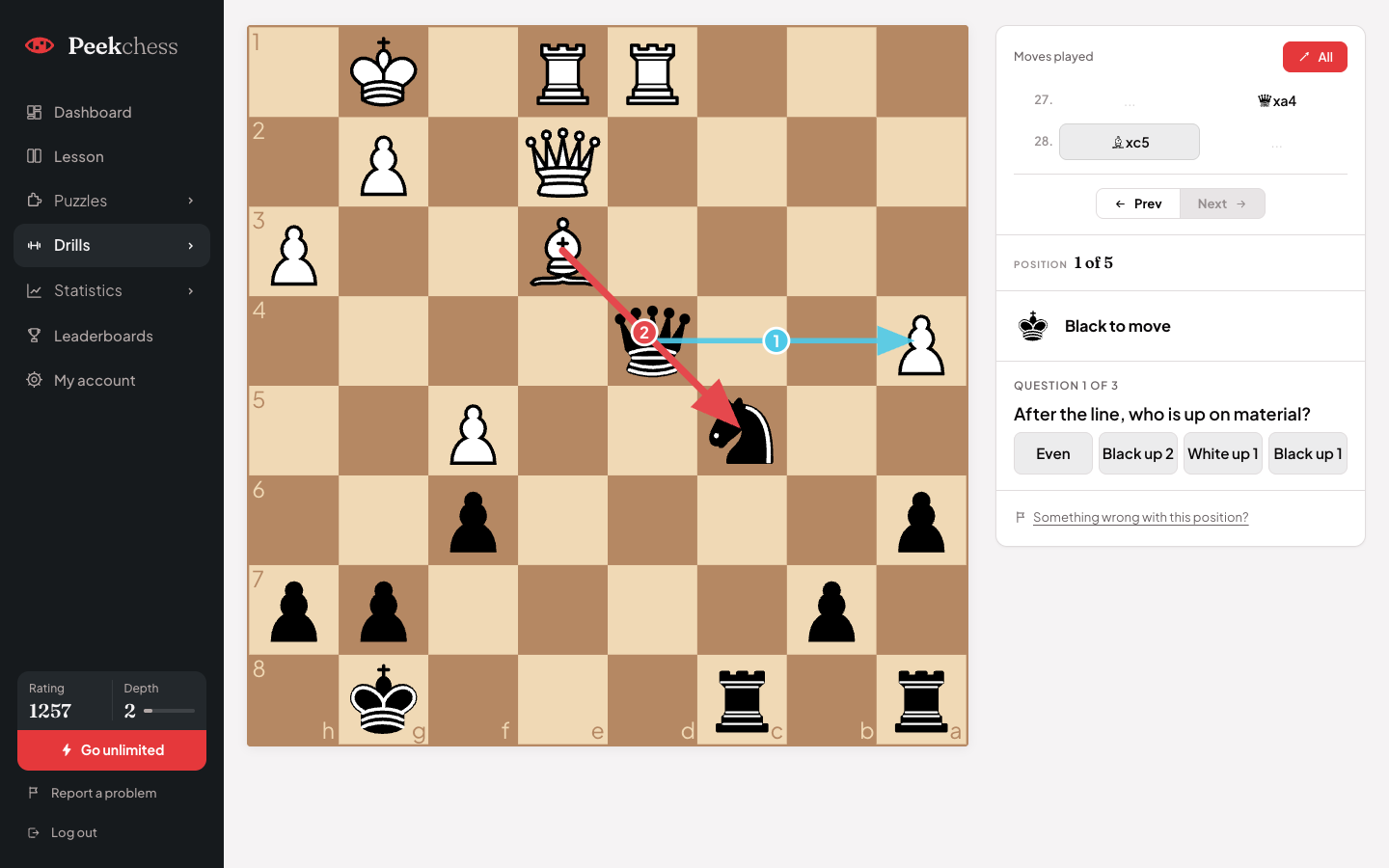
- 1The pieces stay still while you solve. If the board moves after your first move, the site is doing the visualization for you. In a game nobody moves the pieces for you.
- 2Lines longer than one move. Most puzzles end after your first move. Calculation starts at the second.
- 3The defender's best replies. Training only your own moves teaches hope chess. A good trainer makes you meet the reply.
- 4The why, not only the answer. When you miss, you need to know what you didn't see.
- 5Your level. Too easy teaches nothing, too hard teaches guessing.
- 6Something you'll do every day. Ten minutes daily beats a course you never finish.
How do the options compare?
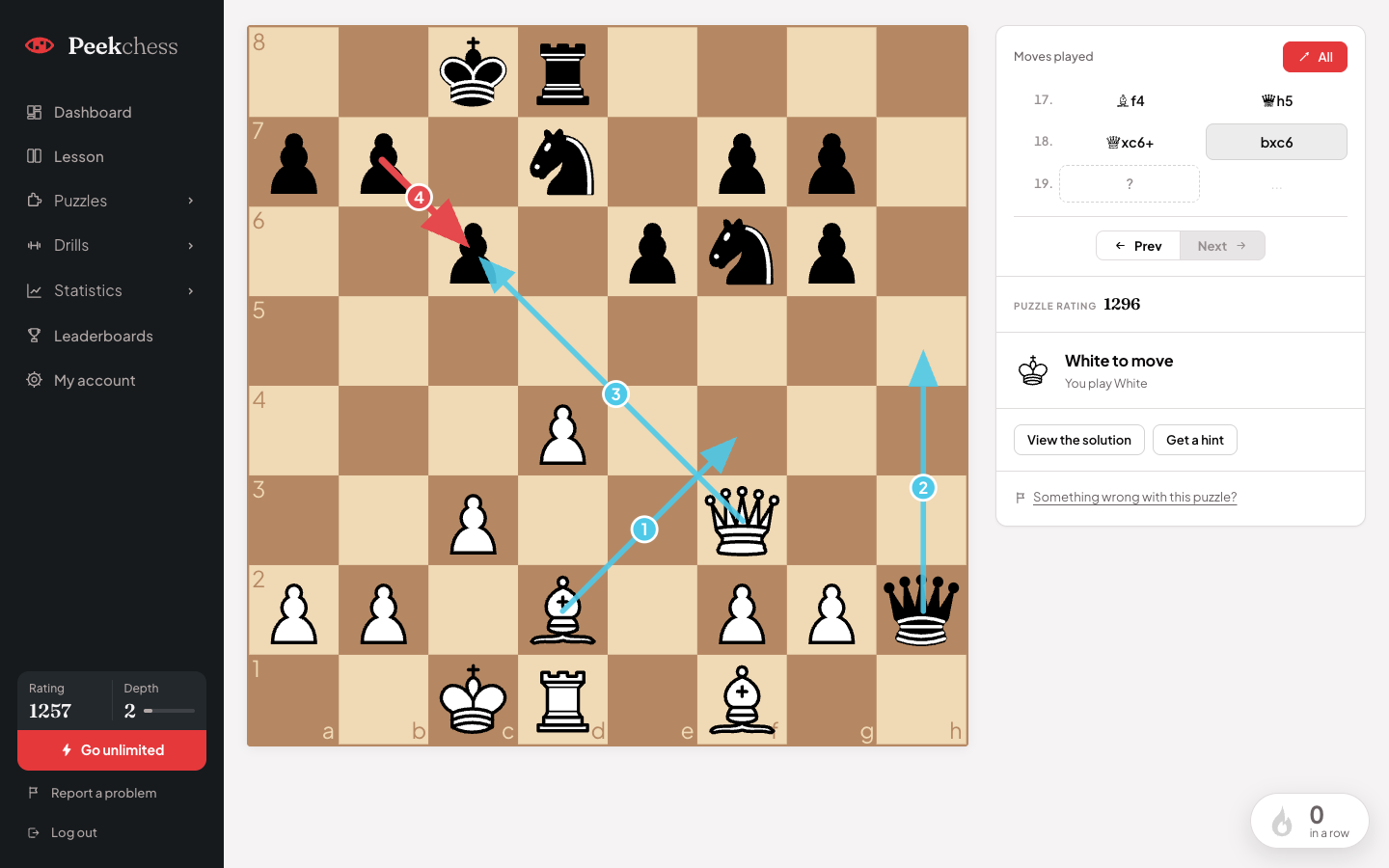
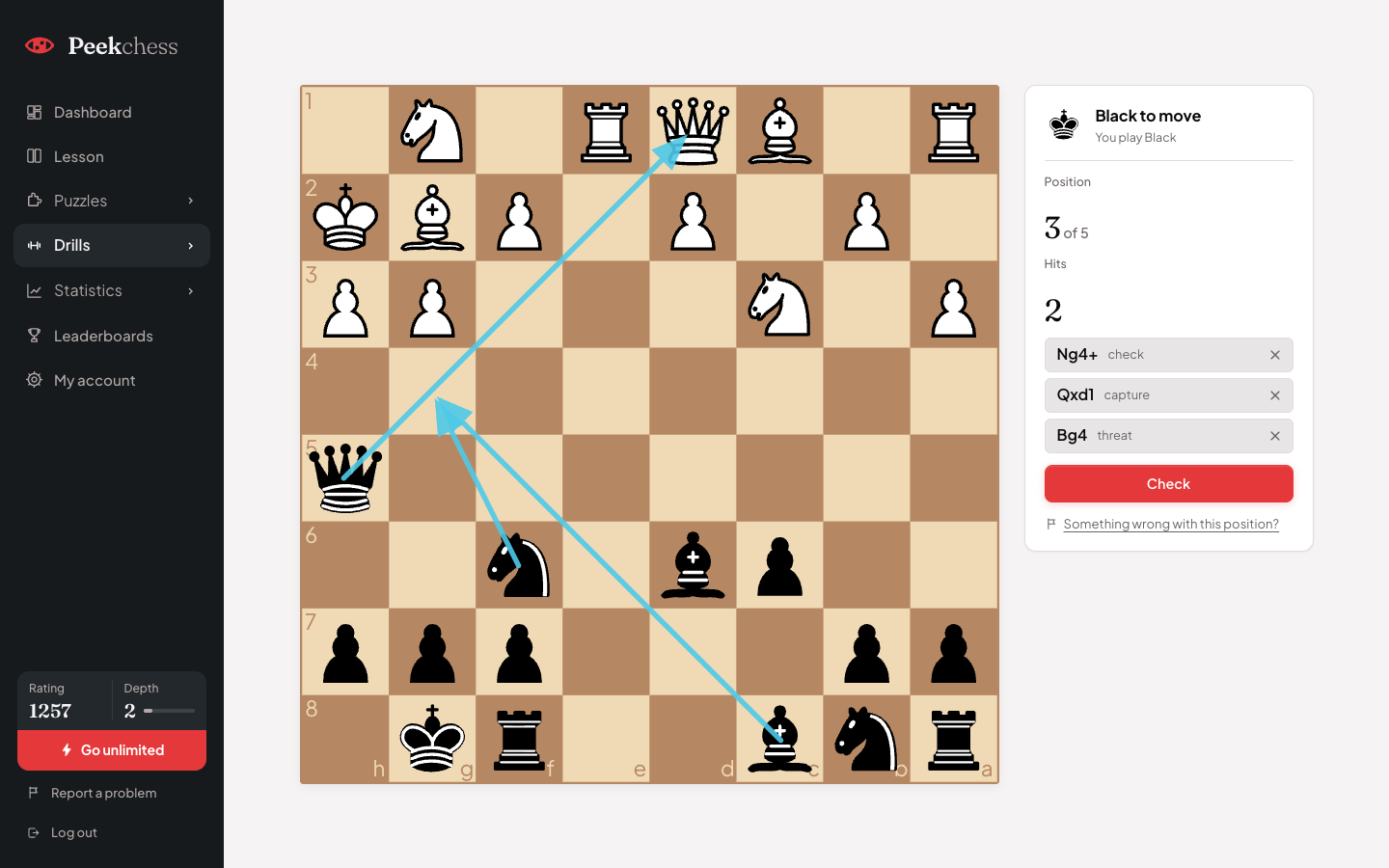
1PeekchessThe board freezes and you play the line in your head, with drills for each step of calculation and Peek AI explanations.
2Lichess puzzlesA huge free puzzle database. The pieces move after each correct move. Good for volume, at no cost.
3Chess.com puzzlesRated puzzles, Puzzle Rush and more. The pieces move. Good for pattern speed.
4ChessTempoA large rated tactics database with detailed settings. The pieces move by default. Good for serious tactics work.
5Chessable coursesVideo and move-by-move calculation courses from strong players. The course is fixed. Good for structure.
6BooksClassics like Kotov's Think Like a Grandmaster and Aagaard's Calculation. You set up the position and calculate without moving.
Prices change, so check each site before you decide.
Which one should you choose?
- You want lots of puzzles at no cost: Lichess. Fast patterns are worth having, even with the pieces moving.
- You like a course with a teacher: Chessable. Pick a calculation course at your level and finish it.
- You want the classic method: a book, a board, and the discipline not to touch the pieces until you have written your line down.
The question I repeat most in lessons is “what does your opponent want?” A trainer that only shows your own moves never makes you ask it. And “the engine says so” teaches nothing. The why does.
For the details, see the side-by-side comparisons: Chess.com, Lichess, ChessTempo, Chessable and Aimchess.