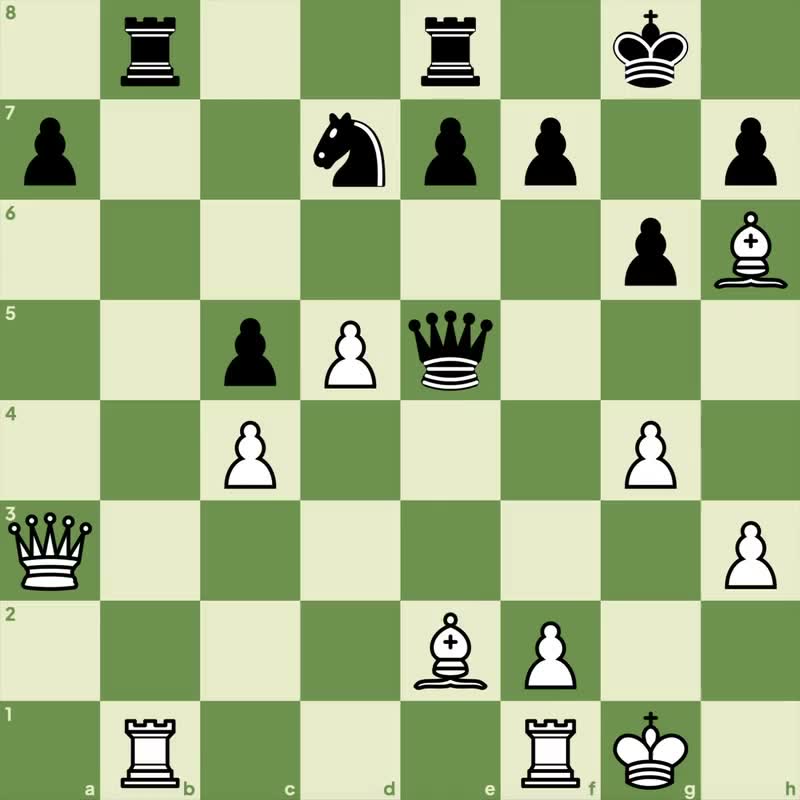
Best Chess Puzzle Apps 2026

Best chess puzzle apps 2026, tactics training compared across Peekchess, Chess.com, Lichess, ChessTempo and three more, is what this page covers, and the first thing to say is that these seven are not all the same kind of thing. Some are free libraries you can solve all day, some are part of a site where you also play, and a few train one skill on purpose. For chess calculation, what matters is whether the app makes you see the whole line before you move. I'm a chess coach, and I built Peekchess for exactly that, which is why it comes first below. I've tried to be fair to all of them.
I took the four big puzzle sites and added two smaller ones that each have an idea of their own. Every fact and price comes from each site's own pages, checked on 13 November 2026. Prices change, so check again before you pay.
Best chess puzzle apps 2026 for tactics training, what makes one good for calculation?
The mistake I see most often is simple. A player spots one move, decides it's great and plays it without calculating. And when they do calculate, they don't picture their opponent's best replies. They work out the line as if they could play several moves in a row while the other side just waits. The big puzzle platforms don't help with this, because they encourage you to calculate one move at a time. You play a move, the board answers for you, and only then do you look again. Do that every day and it turns into a bad habit in your games.
In my view four things matter more than how big the library is, and the first two are about calculation.
- 1Does the board move for you? On most apps the reply plays on the board after each move, so you can solve a puzzle one move at a time. The better ones make you calculate the whole line yourself, the way a game does.
- 2Can you guess? With a clock, or retries until something works, you can guess your way through. With no clock, and one wrong move ending the puzzle, you have to calculate rather than guess.
- 3Puzzles at your level. If they're too easy you stop thinking, and if they're too hard you start guessing.
- 4Feedback you understand. Being told "Incorrect" teaches you nothing. Knowing why does.
The best chess puzzle apps at a glance, with calculation in mind
The last column lists the puzzle modes each one has. The sections after the table go through how each of them trains calculation.
| Site | Best for | Board moves for you? | Can you guess? | Free | Paid | Puzzles | Ways to solve |
|---|---|---|---|---|---|---|---|
| Peekchess | Serious chess puzzles | No, moves are drawn as arrows | No, no clock and one wrong move ends the puzzle | 10 a day across lessons, puzzles, Survival and Full calculation, plus unlimited visualization drills and the daily chess puzzle | $7.99 a month or $59.99 once for life | More than 6 million chess puzzles | Daily lesson, threat puzzles, Survival, drills |
| Chess.com | Puzzles beside your games | Yes | Yes, Rush and Battle are timed | 3 a day, 1 Rush, 1 Battle | Gold from $6.99 a month, or $49.99 a year | 500k+ | Rated, Rush, Battle, Custom, Daily |
| ChessTempo | Custom problem sets and spaced repetition | Yes | Not in Standard mode, Blitz is timed | Unlimited a day | Gold from $4 a month | 350k+ | Themes; custom sets on paid plans |
| Lichess | Free puzzles, no limits | Yes | Yes | Everything | Nothing to buy | More than 6 million, unlimited | Themes, Storm, Racer, Streak |
| Chessable | Puzzle courses by strong players | Yes | The line comes back until you remember it | Dozens of free courses | Per course, or PRO | Varies by course | MoveTrainer, spaced repetition |
| Listudy | Free blind tactics | You see the board from two moves ago | Yes | Everything | Nothing to buy | Thousands | Blind, pieceless, daily puzzle |
| Chessiverse | Human-like bots, puzzles on the side | Yes | Yes, Puzzle Sprint is timed | A free account | Premium | 9,000+ | Puzzle Sprint |
- Best for serious chess puzzles. Peekchess, which punishes guessing and trains you to calculate the full line, with no clock so you can take your time.
- Best for puzzles beside your games. Chess.com, with 500k+ puzzles and Rush and Battle.
- Best for custom problem sets. ChessTempo, with spaced repetition on the paid plans.
- Best for free, unlimited puzzles. Lichess, with no ads and no limits.
- Best for puzzle courses by strong players. Chessable, with spaced repetition on every course.
- Best for free blind tactics. Listudy, which makes you picture the board yourself.
- Best for bots with puzzles on the side. Chessiverse, with over 1,000 human-like bots.
1. Peekchess for calculation training, seeing the whole line before you move
Before Peekchess existed, I was already doing this by hand in my lessons. I drew the moves as arrows on a shared screen and left the pieces where they were. With lower-rated players I kept it to a few moves at a time. Stronger players calculated much deeper. Peekchess is that same exercise, built into an app.
Peekchess is a chess puzzle app that trains calculation. The board stays in view and the pieces don't move. You calculate each line in your head, so you learn to see ahead and stop blundering.
Peekchess has more than 6 million chess puzzles. When you solve one, the board stays still and the moves land as arrows. Nothing moves until you've played the whole line in your head, so what you're training is the calculation a game asks for, not just spotting the first move. Peek AI explains every move in plain English, and threat puzzles have you play the attack your opponent is about to make. I built it, so take this entry with that in mind.
- Best for
- Serious players who are good at puzzles but still blunder in their games.
- Cost
- Free to start with 10 a day across lessons, puzzles, Survival and Full calculation, plus unlimited visualization drills and the daily chess puzzle, and no card is needed. Peekchess Pro is $7.99 a month or $59.99 once for life, with 7 days free on the monthly plan.
- Website
- peekchess.com
Pros
- More than 6 million chess puzzles.
- The board stays still, the same as it does in a game.
- Puzzles follow your rating and how far ahead you can already see.
- A daily lesson of ten puzzles, five aimed at what you keep missing and five from the openings you play.
Cons
- Each puzzle takes longer, because you calculate all of it first.
- The free plan is 10 a day.
- There are no games to play against other people.
2. Chess.com for chess puzzles beside your games, and how it trains calculation
Chess.com lists 500k+ puzzles, and rated puzzles give you a puzzle rating. Puzzle Rush gives you 3 or 5 minutes and ends after three mistakes, while Puzzle Battle is a 3-minute rush against another player. With Custom Puzzles you choose the themes and a rating range, and every member gets the Daily Puzzle. When it comes to calculation, the pieces move as you solve, and once you're playing against the clock it can reward the first move that looks right.
- Best for
- Players who already play on Chess.com.
- Cost
- Free accounts get 3 puzzles a day, plus one Rush and one Battle. A paid membership makes them unlimited, and Gold is $6.99 a month, or $49.99 a year.
- Website
- chess.com
Pros
- 500k+ puzzles and a puzzle rating.
- Rush and Battle are a lot of fun.
- Puzzles, games and lessons all in one account.
Cons
- 3 puzzles a day doesn't go far on a free account.
- The pieces move as you solve.
- Against the clock, it can reward the first move that looks right.
3. ChessTempo for custom problem sets, and how it trains calculation
My one complaint about ChessTempo is the interface. It looks and feels outdated next to the newer apps, and that can put you off before you get to the good part.
ChessTempo describes itself as free online training in chess tactics and puzzles, and its home page lists 350k+ tactics. You get a tactics rating, you can pick themes and get a rating for each one, and there are statistics broken down by motif. Paid members can also build custom problem sets and use spaced repetition. For calculation, the reply plays out on the board after each move, so you can solve a long puzzle one move at a time.
- Best for
- Players who want to build their own problem sets and go back over their misses with spaced repetition, which is on the paid plans.
- Cost
- Free, with unlimited puzzles a day from 110,000+ problems. Gold is $4 a month.
- Website
- chesstempo.com
Pros
- 350k+ tactics, with a tactics rating.
- A separate rating for each theme you train.
- A game database and online play on the same site.
Cons
- The reply plays out on the board after each move.
- I couldn't find a written explanation of the idea on its tactics pages.
- It takes a while to find your way around.
4. Lichess for free chess puzzles, and how it trains calculation
Lichess is free and open source, it has no ads, and its features page says every feature is free for everyone, forever. Its puzzles are rated and taken from real games played on the site. You can train one theme at a time, keep an eye on your puzzle dashboard, or play Puzzle Storm, Puzzle Racer and Puzzle Streak when you'd rather make a game of it. For calculation, the pieces move as you solve, so you can get through a long puzzle one move at a time.
- Best for
- Solving as many puzzles as you like, without paying.
- Cost
- Free, with no limits. It's paid for by donations, and a Patron account is optional.
- Website
- lichess.org
Pros
- Unlimited puzzles, with no ads.
- Storm, Racer and Streak when you want something faster.
Cons
- The pieces move as you solve.
- Its puzzle pages show the moves, but I couldn't find a written explanation of each one.
- Because the pieces move for you, it's easy to rack up puzzles without really calculating them.
5. Chessable for puzzle courses by strong players, and how it trains calculation
Chessable is a course site. The courses are written by strong players, some of them on tactics and calculation, and its MoveTrainer uses spaced repetition to bring back the positions you miss. Signing up is free, but most courses are paid. The catch for calculation is that a course can run out, and from that point you're remembering answers rather than calculating them.
- Best for
- Players who like a teacher's explanations and a set order to work through.
- Cost
- Signing up is free. Most courses are paid, either one by one or through a Chessable PRO membership.
- Website
- chessable.com
Pros
- Courses explained by strong players, in their own words.
- Spaced repetition brings back what you miss.
- Full courses on openings and endgames as well.
Cons
- A course can run out, and then you're remembering answers.
- Most courses cost money.
6. Listudy for free blind tactics, and how it trains calculation
Listudy is a small site, free and open source, built around spaced repetition for openings, endgames and tactics. Its Blind Tactics show you the board as it was two moves ago, so you have to picture the rest yourself. There are also pieceless tactics, a daily puzzle and thousands of tactical sequences from real games. That's where it touches calculation, because Blind Tactics make you picture the last two moves in your head before you start looking for the answer.
- Best for
- Free visualization practice with blind tactics.
- Cost
- Free and open source.
- Website
- listudy.org
Pros
- Blind and pieceless tactics, for free.
- Spaced repetition for openings and endgames.
- Open source.
Cons
- Thousands of puzzles, rather than hundreds of thousands.
- Its puzzles show the moves, but I couldn't find a written explanation of each one.
7. Chessiverse for bots, with puzzles on the side, and how it trains calculation
Chessiverse is mostly a place to play against over 1,000 human-like chess bots in your browser. It also has 9,000+ puzzles and a Puzzle Sprint mode. Every account is free, and Premium unlocks all the bots and training features. For calculation, the puzzles are a side feature next to the bots rather than a calculation course.
- Best for
- Players who want bots that play like people, with some puzzles as well.
- Cost
- A free account. Premium costs extra, and its price isn't on the home page.
- Website
- chessiverse.com
Pros
- Over 1,000 human-like bots to play.
- 9,000+ puzzles and a Puzzle Sprint.
Cons
- The puzzles are a side feature, with a much smaller library.
- Some features need Premium.
Best chess puzzle solving apps, which one is right for your calculation?
- Pick Peekchess if you're good at puzzles but still blunder in games.
- Pick Chess.com if you already play there and want puzzles in the same account.
- Pick ChessTempo if you want custom problem sets and spaced repetition.
- Pick Lichess if you want lots of free puzzles.
- Pick Chessable if you like working through a course.
- Pick Listudy if you want free blind tactics.
Whatever you end up using, calculate each chess puzzle in your head before you move a piece. And if the board ends up somewhere the line in your head didn't, count it as a miss, even if your first move was right.
Questions about chess puzzle apps and calculation
Read next. Best chess puzzle websites, Best chess puzzle trainer and Chess tactics puzzles for calculation.
What is the best chess puzzle app?
For learning to see the whole line before you move, Peekchess. If you want puzzles in the same account as your games, Chess.com. For custom problem sets and spaced repetition, ChessTempo. And for free, unlimited puzzles, Lichess.
What is the best free chess puzzle site?
Lichess. Every feature is free for everyone, with no ads and no limits. Listudy is also free and open source, and it has blind tactics for visualization.
How many free chess puzzles do you get on Chess.com?
A free account gets 3 puzzles a day, plus one Puzzle Rush and one Puzzle Battle. A paid membership makes them unlimited, and Gold is $6.99 a month, or $49.99 a year.
Is Puzzle Rush good training?
It's fun, and it builds pattern speed. The problem is that against the clock it's easy to play the first move that looks right, and that habit can cost you games. I'd treat it as a game, and do your real training on puzzles you solve slowly and all the way through.
Why am I good at puzzles but bad at games?
A puzzle tells you there's something to find, and a game doesn't. On top of that, on many sites the pieces move as you solve, so you never have to calculate the whole line. In a game you do.